Denver is making significant shifts in how the city handles waste — especially from one of the largest contributors to landfill streams: the construction industry. With the rollout of the Waste No More ordinance, new expectations are setting in for builders, contractors, and developers to rethink how materials are managed on job sites and demolition projects. Below, we explore what the program means and how sustainable material innovations — like those from Renegade — can help the industry thrive in this evolving landscape.
What Is Denver’s Waste No More Program?
Approved by Denver voters as Initiated Ordinance 306 (Waste No More), this sweeping policy aims to dramatically increase recycling, composting, and diversion of waste from landfills across the city. The ordinance will require businesses, multifamily buildings, events, and importantly — construction and demolition (C&D) projects — to adopt new waste reduction practices under enforceable rules beginning in September 2026.
For qualifying construction and demolition projects, this means:
- Projects must reuse or recycle 50% of all debris generated on site. This must include a minimum of three materials such as concrete, plastic, asphalt, untreated wood, metal, and corrugated cardboard.
- Before permits are issued, construction and demolition teams must submit a Recycling and Reuse Plan outlining how waste will be diverted and reused.
- At some point in the future, a security deposit will be charged and refunded based on meeting diversion targets.
- By 2036, waste diversion requirements increase to 65%, pushing the industry toward long-term change and lower environmental impact.
The heart of Waste No More is to shift Denver toward a circular economy model — where materials are reused, recycled, and kept in productive use instead of piling up in landfills.
Why This Matters for Construction
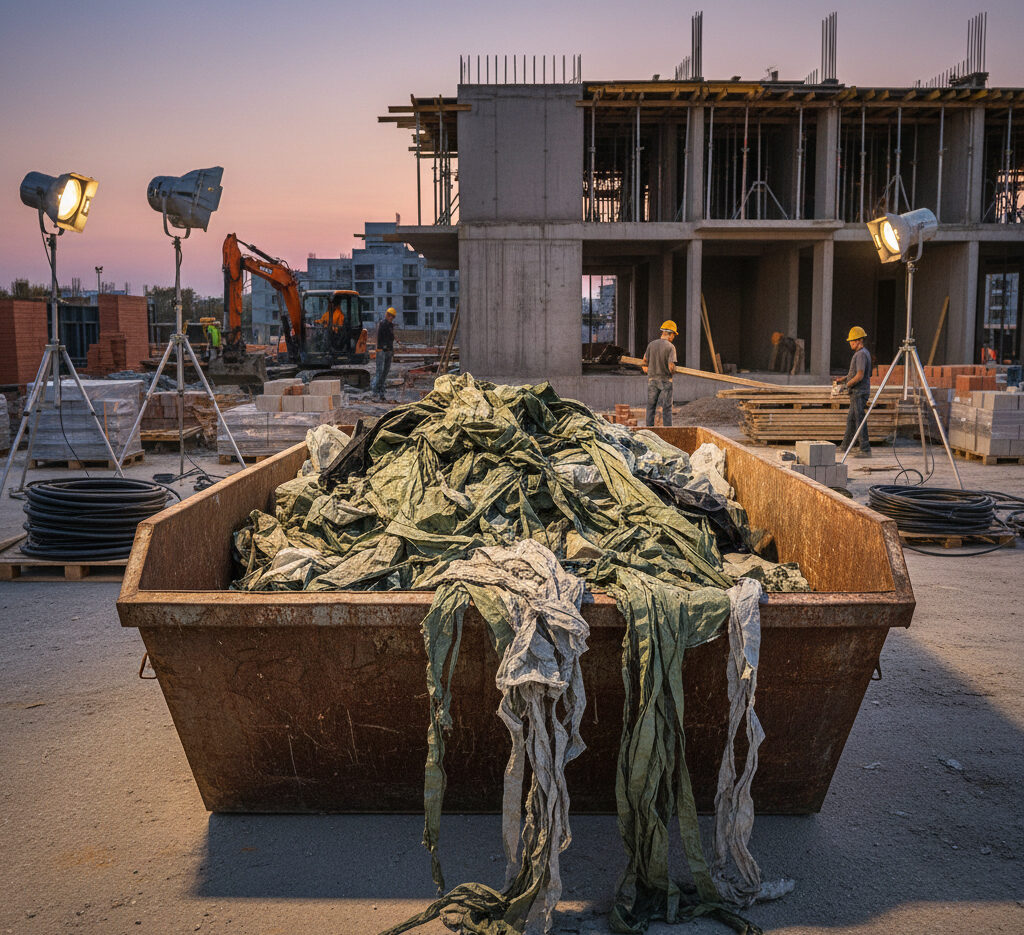
Construction generates large volumes of waste — from structural components to protective materials on site. National best practices show that reducing, reusing, and recycling at every stage can cut environmental impact, improve efficiency, and lower disposal costs. EPA
Under Waste No More, Denver construction firms will need to take proactive waste management strategies seriously — from planning and execution to final reporting.
Enter Renegade: Sustainable Products for Modern Builds
As the industry adapts, Renegade is emerging as an innovative partner for sustainable construction practices. While traditional building site materials like disposable plastic sheeting or PVC-coated fabrics are ubiquitous, they contribute to waste and often lack recycling pathways — a mismatch with Denver’s sustainability goals.
Renegade offers durable, locally recyclable, and lower-impact alternatives to traditional construction plastics:
- Construction-grade fabrics and tarps designed for high durability on job sites — stronger and more tear-resistant than standard polyfilms, reducing the need for frequent disposal. Renegade Plastics
- Reusable materials that outperform disposable counterparts, cutting down on jobsite waste and disposal fees. Renegade Plastics
- Tarps and drop cloths that eliminate harmful additives such as PVC, PFAS, and heavy metals — making them better aligned with circular waste goals and potentially contributing toward LEED or sustainability scoring on projects. Consupt
- Locally recyclable materials that are accepted by our partners in the Front Range who return the recycled material back to Renegade for use in another generation of products.
- A corporate mission centered on building a circular economy, where industrial fabrics are designed and recycled back into new material streams instead of becoming landfill waste. Renegade Plastics
Notably, Renegade’s efforts are recognized regionally: the company was highlighted by NextCycle Colorado for diverting construction and demolition waste into useful polypropylene-coated fabrics, helping build local recycling markets for industrial materials. Waste Advantage Magazine
A Win-Win for Contractors and the Environment
Adopting materials like Renegade’s can support Waste No More compliance in multiple ways:
- Reduce Waste at the Source: Using long-lasting, reusable construction fabrics decreases the volume of disposable material entering the waste stream.
- Support Diversion Plans: High-performance, recyclable materials give contractors additional options to meet Denver’s recycling and reuse plan requirements.
- Align With Sustainability Goals: Sustainable material choices help meet not only regulatory mandates but also corporate Environmental, Social, and Governance (ESG) commitments that many firms are now prioritizing.
Conclusion
Denver’s Waste No More program represents a shift toward resource recovery, accountability, and circular material flows — not only for everyday recycling but for the construction industry’s most challenging waste streams. As builders and developers prepare for these changes, material choices will make a difference.
Innovators like Renegade offer practical tools and sustainable alternatives that help reduce waste, improve on-site performance, and support long-term environmental goals. By embracing sustainable products and practices now, the construction industry can lead Denver into a future where waste is minimized, materials stay in use longer, and every project contributes to a healthier, more resilient city.


Interested in Our Fabrics?
Contact Us