
What Are the Best Barn Curtains for Long-Lasting Livestock Protection?
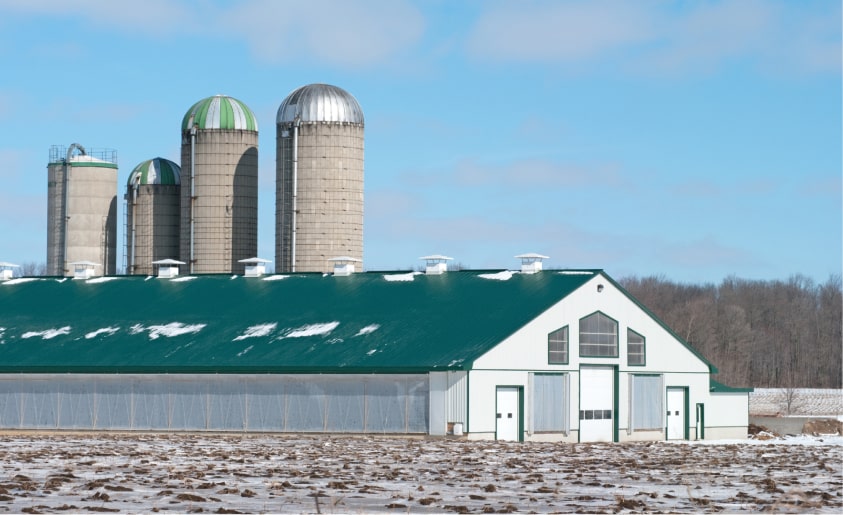
For decades, the only roll a barn curtain fabricator could specify with confidence was a heavy PVC-coated textile, and that fabric carried every limitation of PVC chemistry into the finished curtain: brittleness in the cold, plasticizer migration, weight, and a disposal liability that gets harder to defend with every passing year.
The end user feels those limitations in the field.
The fabricator inherits the warranty calls that follow.
Renegade is a fabric supplier to the curtain industry, not a curtain manufacturer. We make a polypropylene-based composite roll that fabricators, OEMs, and converters can spec into the barn curtain systems they sell, with welds, hems, keder edges, and grommet sets that run on the equipment already on your floor.
This page is for the manufacturers and converters who are evaluating their next material spec. It covers how Renegade fabric is constructed, the conditions your customers’ barns are losing money to, the eight livestock applications where curtains built from our fabric are doing real work, and the questions buyers and fabricators ask most before a roll ships.
Science of Superior Materials: How Are Barn Curtains Made From Renegade Fabrics Constructed for Extreme Durability?
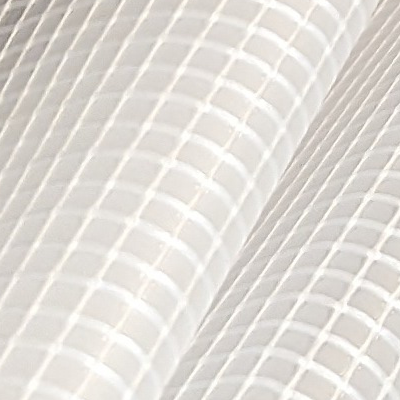
A roll of Renegade barn curtain fabric arrives at your shop as a single material category construction: a woven polypropylene scrim sandwiched between two layers of our proprietary polypropylene coating. That structure gives a curtain manufacturer:
- The tear strength of a heavy industrial textile
- The weldability of a flexible film
- A clean monomaterial profile that can be mechanically recycled at the end of life
There is no PVC plasticizer to migrate, no phthalate softener, and no laminated polyurethane skin that delaminates after a few seasons in the sun.
For a curtain manufacturer, that translates into a roll that runs cleanly through hot-air and impulse welders, sews on standard industrial machines, and holds dimensional stability across the cuts, hems, keder tubes, and grommet sets that a finished curtain requires. Workhorse weights (such as PPI-370 and PPI-420) sit in the same tear-strength class as an 18-oz PVC-coated textile while weighing on average 40% less than equivalent PVC.
This lightens long curtain runs in shipping, in installation, and in every roll-up cycle a customer puts the finished system through. Lighter, stronger, and weldable on the equipment fabricators already own: that is the construction story behind our agricultural fabric line.
7 Ways an Exposed Barn Wall Is Quietly Hurting Your Animals & Your Bottom Line

Your customers are not buying a curtain. They are buying a way to seal a wall against the conditions a closed barn cannot solve, and they will judge the curtain you ship by how well it holds that line for one more season, two more seasons, ten more seasons. The fabric you spec is the lever that determines the answer.
Below are seven failure modes the curtains your shop fabricates are being asked to solve. Each one is a margin leak the producer pays for (whether or not they can name the cause), and each one is a sales conversation (one that a smarter fabric lets you have with confidence).
- Wind Stress on Livestock
Sustained wind through an open sidewall raises an animal’s effective lower critical temperature, which means feed energy gets burned on body heat rather than growth or milk. Calves and finishing animals are especially sensitive to chill. A barn curtain spec’d to block the worst of the airflow, without sealing the structure into a stagnant box, is the deliverable your fabrication shop sells against the alternative of an unprotected wall. - Rain & Moisture Intrusion
Driving rain through an open wall does not simply wet the bedding; it soaks feed, corrodes equipment, and feeds the bacterial load in the air. Wet straw and damp concrete are also where most respiratory and hoof problems begin. A waterproof curtain face, fabricated from a fabric that holds its coating through years of weather, is the deliverable your customer expects. - Temperature Swings Kill Productivity
The shoulder seasons swing between mild afternoons and cold nights, and animals pay for every degree of overshoot. Producers see the cost in milk yield, daily gain, and feed efficiency that drift in directions the ration cannot explain. A roll-up curtain built from fabric that flexes through the cycle, day after day, is what gives the farm manager the ability to set the conditions instead of paying to chase them. - Snow & Ice Loads
A barn wall exposed to driven snow accumulates drifts inside the structure, damages stored equipment, and creates ice underfoot once meltwater hits the floor. Curtains built from fabrics that crack in the cold are no better than no curtain at all. Renegade fabric retains flexibility well below freezing because it does not rely on plasticizers, so the curtains your shop ships keep working in the conditions they are being asked to handle. - Summer Heat & Humidity Buildup
Warm-weather ventilation is not just about comfort; it is about pulling humid air and ammonia out of the animal zone before performance stalls. Curtains that drop fully on a hot afternoon let the cross-breeze do that work, and a translucent option keeps daylight inside the barn so workers and animals can see clearly through the day. A fabric line that supports both translucent and blackout SKUs gives your shop the catalog to sell across the season. - Birds & Rodents Move In
An unsealed sidewall is an invitation to sparrows, starlings, and rodents that contaminate feed, foul water, and carry disease into the herd or flock. A properly hung curtain closes that perimeter without giving up the ventilation animals need. The pest pressure drop alone is a closing argument many of your buyers will recognize. - Rising Energy Costs
Heating, cooling, and ventilating an open building is paying twice for the same air. A curtain that opens and closes against the weather lets a manager set the conditions instead of paying to chase them. Energy savings on the customer’s utility bill is the specification logic that justifies a curtain build to the producer’s CFO.
The Right Curtain Roll Makes All the Difference in These 8 Agricultural Applications
A barn curtain fabric is not a one-spec proposition. It has to flex across radically different animal physiologies, building geometries, and sanitation regimens. The fabricators who win this category are the ones who can match the right roll to the right finished curtain, and that match starts with knowing which spec each application demands.
The eight applications below are where the curtains your shop ships, built from Renegade’s agricultural curtain fabric line, are already at work. Each application puts a different demand on the roll: light transmission, weight class, surface texture, opacity, and how the finished curtain attaches to the building.
- Dairy Barns
Lactating cows are productivity machines that respond to small changes in airflow, light, and humidity. A translucent curtain lets daylight into the barn while blocking wind and precipitation, supporting the visual environment that cows and milkers both need. For your shop, that likely means a roll that offers light transmission. - Hog & Swine Facilities
Hog barns demand tight environmental control across grow-out, with ammonia management and temperature stability driving feed conversion. A polypropylene-based curtain holds up to the wash, disinfectant, and pressure-spray cycles that cause PVC to chalk and crack. Translucent and blackout options in the same fabric family give you the SKU coverage to sell into both sow rooms and finishing barns. - Poultry Houses
Broiler and layer houses need curtain systems that hold a tight seal against drafts while cycling open for ventilation. Blackout fabric is critical for layer light programs, and the curtain’s chemistry matters in a barn where air handlers run constantly across thousands of birds. Renegade’s phthalate-free, plasticizer-free construction is a cleaner specification you can put in front of poultry integrators who track those questions. - Equine Barns & Riding Arenas
Horse facilities want airflow without the gusty drafts that spook animals or chill stalls. A curtain wall on a riding arena also doubles as weather protection for the riding surface, extending the workable season. Translucent options keep the arena and aisle naturally lit, which is a clear upsell over an opaque incumbent fabric the moment a barn manager sees the difference. - Calf Nurseries
Calves are the most temperature-sensitive animals in most dairy and beef operations, and a curtain that fails in the cold becomes a calf-health problem fast. Renegade fabric retains flexibility well below freezing because it does not rely on plasticizers, which means the curtain your shop builds still moves, seals, and rolls when the temperature falls. The wipe-clean surface also supports the biosecurity protocols any calf barn manager prioritizes. - Hay & Feed Storage
Stored feed is investment sitting on a slab, and an exposed wall admits wind, rain, and birds. A heavy-duty curtain wall closes the building’s worst weather face without committing the operation to permanent siding. Heavier weight classes such as PPI-370 and PPI-420 give your shop the tear and abrasion margins that hay and feed barns demand. - Warehouses & Ag Storage Buildings
General-purpose ag storage runs the gamut from machinery to chemicals to bagged input, and each of those needs the building tight against weather and pests. A curtain wall lets a manager open the building for loading and close it for storage without the cost of hard-sided construction. The same roll of fabric serves a corrugated-frame storage shed and a pole-barn implement bay, which simplifies your inventory planning. - Crossover & Connector Passages
The covered walkway between two barns is one of the highest-traffic spots in a livestock operation and one of the most exposed. A curtain enclosure on a crossover keeps animals moving without the wind and rain shock of an open transition. Renegade fabric’s tear and abrasion resistance hold up where animals, gates, and equipment all rub against the same wall, which keeps the warranty calls off your queue.
Get Your 6 Barn Curtain Questions Answered Before You Order
When a barn-curtain order moves toward your production floor, the questions usually come from two places: end users repeating what their integrator or builder asked, and your own ops team checking material compatibility before a roll is committed. These are the six questions our team gets most often before fabric ships:
- How Do I Measure My Barn Opening for Curtains?
Have your customer measure the full opening width and height first, then add the overlap their system needs at the top, sides, and bottom (typically a few inches at every interface to seal cleanly). For a roll-up, factor in the height of the rolled fabric at the fully-open position so it does not cut into ventilation when stowed. - Can Barn Curtains Be Customized to Fit Odd-Sized or Non-Standard Openings?
Yes. Renegade fabric is built to be welded and fabricated to whatever the building demands, including non-rectangular openings, gable cuts, and bay configurations that do not match a stock size. - How Are Barn Curtains Attached to the Building?
Most installs use a combination of keder tube, rope edge, or grommeted hem at the perimeter, with a cable or track running along the moving edge for roll-up or drop-down operation. The right choice depends on building structure, opening size, and whether the curtain is operated manually or by winch. Our fabric supports each of those attachment methods. - What Is a Keder Tube & How Does It Work?
A keder tube is a fabric-wrapped rope or cord welded into the edge of the curtain that slides into a matching aluminum or steel channel on the building. The tube-and-channel pairing creates a continuous, weather-tight seal along the edge while letting the curtain move freely under wind load. It is the standard for high-performance barn curtain edges. - Can Renegade Fabric Be Heat Welded or Sewn?
Yes. Renegade’s polypropylene-based fabric welds cleanly with standard hot-air and impulse welding equipment that fabricators already run for PVC, and it sews on industrial machines. RF welding is the one method the chemistry does not support. - How Do I Clean & Maintain Polypropylene Barn Curtains?
Polypropylene barn curtains clean with soap and water for routine wash-down, and they tolerate bleach and standard barn disinfectants for sanitation cycles. The fabric is inherently chemical-resistant, so the wash routine that compromises a PVC curtain does not degrade ours, which is a maintenance argument your sales team can use in the field.
Get the Barn Curtain System Your Operation Needs (Without the Guesswork)
 The right roll of barn curtain fabric is an animal-health spec, an energy spec, and a labor spec rolled into one, which means the fabric your shop standardizes on is the most consequential decision in the build. Specifying a roll that cracks, fades, or chalks too early costs your customer a season and your team a stack of warranty calls. Specifying a roll that holds the line means a finished curtain wall that:
- Holds the weather
- Holds biosecurity
- Holds up across the full duty cycle of the building it protects
Renegade builds the fabric, and partners with the fabricators, to make that easy to specify.
Tell us about the curtains you build and the customers you serve. Send the dimensions of an upcoming run, share the weight class and opacity you are targeting, or describe the conditions your finished curtain has to handle, and our team will match a roll to the job. Contact us to request a sample, or call (920) 348-4554 to specify a durable PP composite barn curtain fabric for your next production run.