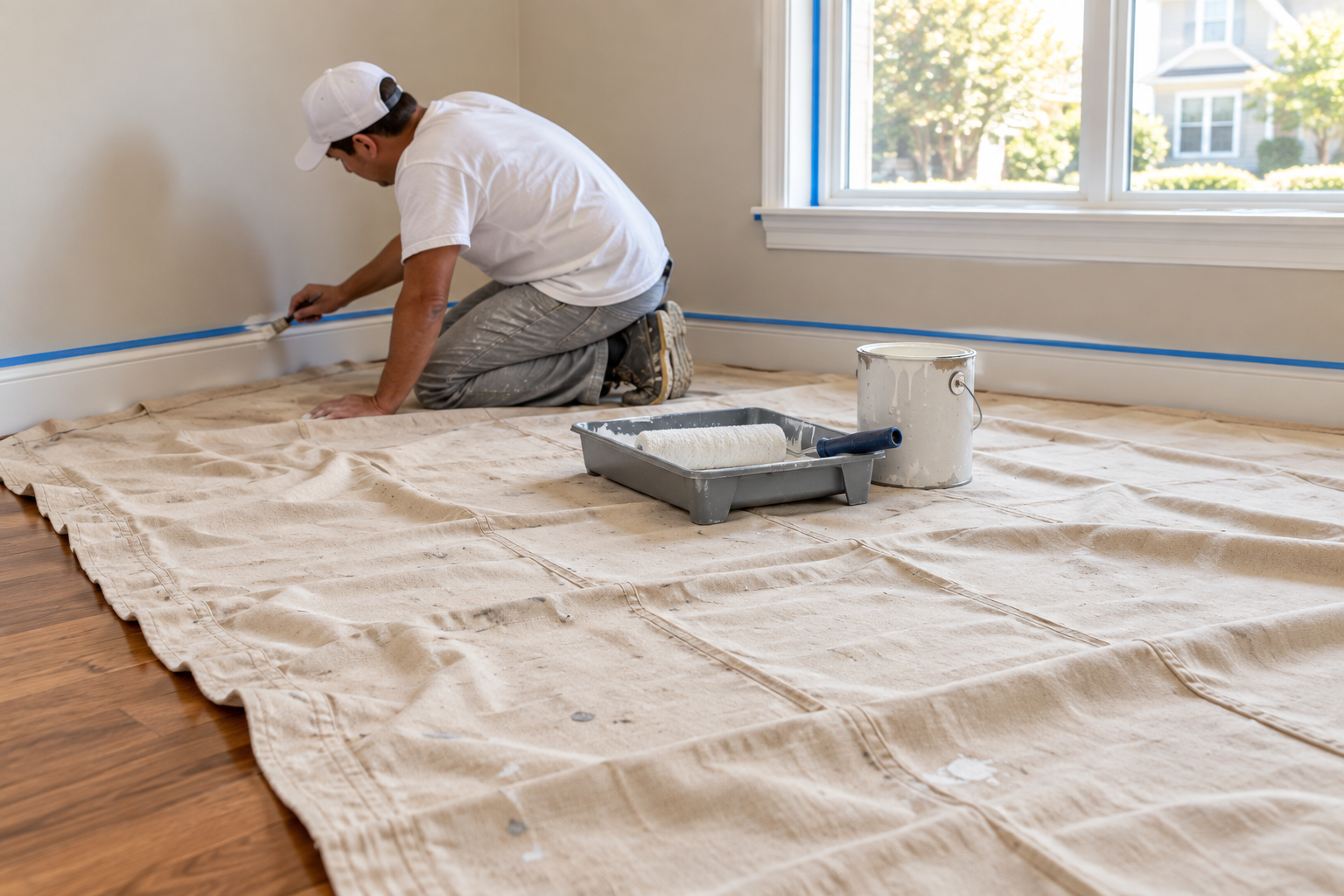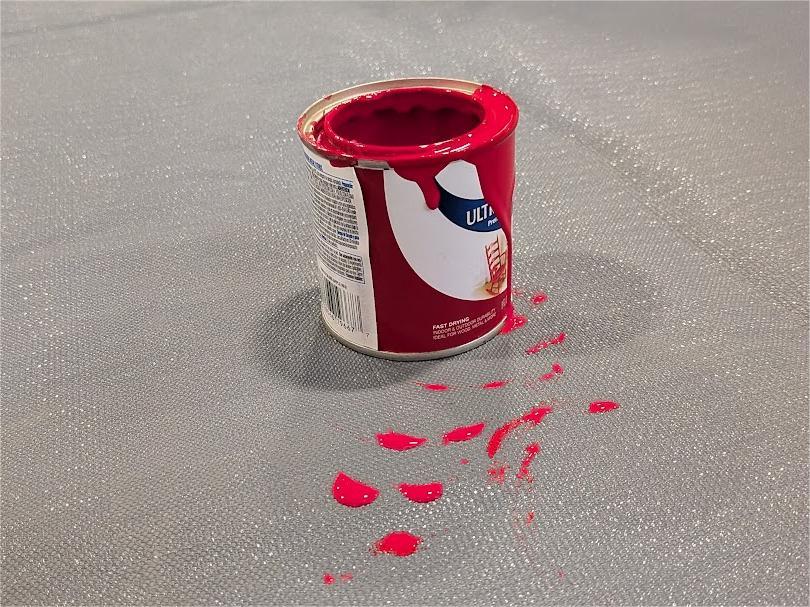
Every painting project eventually comes down to the same question: what’s protecting the floor when the paint inevitably goes somewhere it shouldn’t?
For a quick touch-up, almost anything can get the job done. But painting an entire room, moving ladders across a floor, or breaking out the paint sprayer? That’s a different story.
The terms painter’s tarp and drop cloth are often used interchangeably, but they usually describe slightly different types of surface protection. Painter’s tarps are typically made from waterproof polyethylene or plastic sheeting, while drop cloths are more commonly made from canvas or other heavy-duty fabrics.
Renegade products sit somewhere in between. Our polypropylene-based tarps and drop cloths are designed to combine the waterproof protection people expect from a painter’s tarp with the durability and reusability associated with a traditional drop cloth.
The best option depends on what you’re covering, how much foot traffic it will see, and how messy the project is likely to get. Here’s what to consider before you start rolling, brushing, or spraying.
What Should a Good Painter’s Tarp Actually Do?
A painter’s tarp has one obvious job: keep paint off everything you don’t want painted.
But good floor and surface protection needs to do a little more than simply cover the ground.
For most painting projects, look for a tarp or drop cloth that:
- Blocks paint and moisture from reaching the surface underneath
- Stays in place while you walk, roll equipment, or move a ladder
- Resists tears and punctures from tools and job-site traffic
- Is easy enough to reposition as you work around the room
- Provides enough coverage without creating piles of excess material
- Can be cleaned and reused for future projects
Which of those matters most depends on the job.
What Should You Use to Protect Floors When Painting a Room?
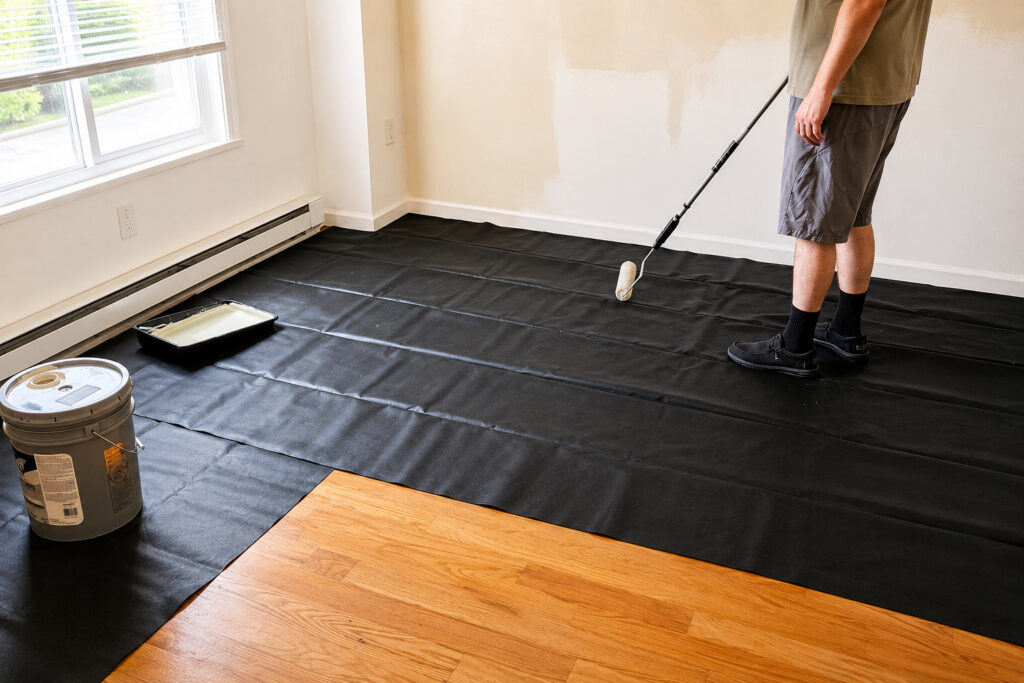
When you’re painting walls or ceilings, the floor usually needs the most protection.
For a standard room, you’ll want enough coverage around the area where you’ll be moving your paint tray, ladder, brushes, and other supplies. A tarp that is too small leaves you constantly repositioning it. One that is much larger than the room can create folds and extra material underfoot.
For rooms with a lot of movement, a heavier floor covering can also be easier to work over than very thin plastic sheeting.
Renegade’s Ready Tread Drop Cloths were developed specifically for this kind of floor protection. At 23 mil thick, they create a more substantial walking surface while remaining waterproof and reusable.
The 10′ x 7′ Ready Tread works well for standard rooms and work areas, while the 15′ x 3.5′ Ready Tread provides a narrower footprint for hallways, entryways, and areas along a wall.
For larger rooms, furniture coverage, or areas where you need considerably more square footage, a larger contractor-grade tarp may make more sense.
What’s the Best Floor Protection for Painting?
Floor protection is where the details really start to matter.
Hardwood, laminate, and tile
On smooth flooring, look for a painter’s tarp that creates a reliable barrier against spills while also giving you a stable surface to walk on.
Thin plastic sheeting can protect against moisture, but it can also bunch, shift, puncture, or become difficult to work over during a longer project.
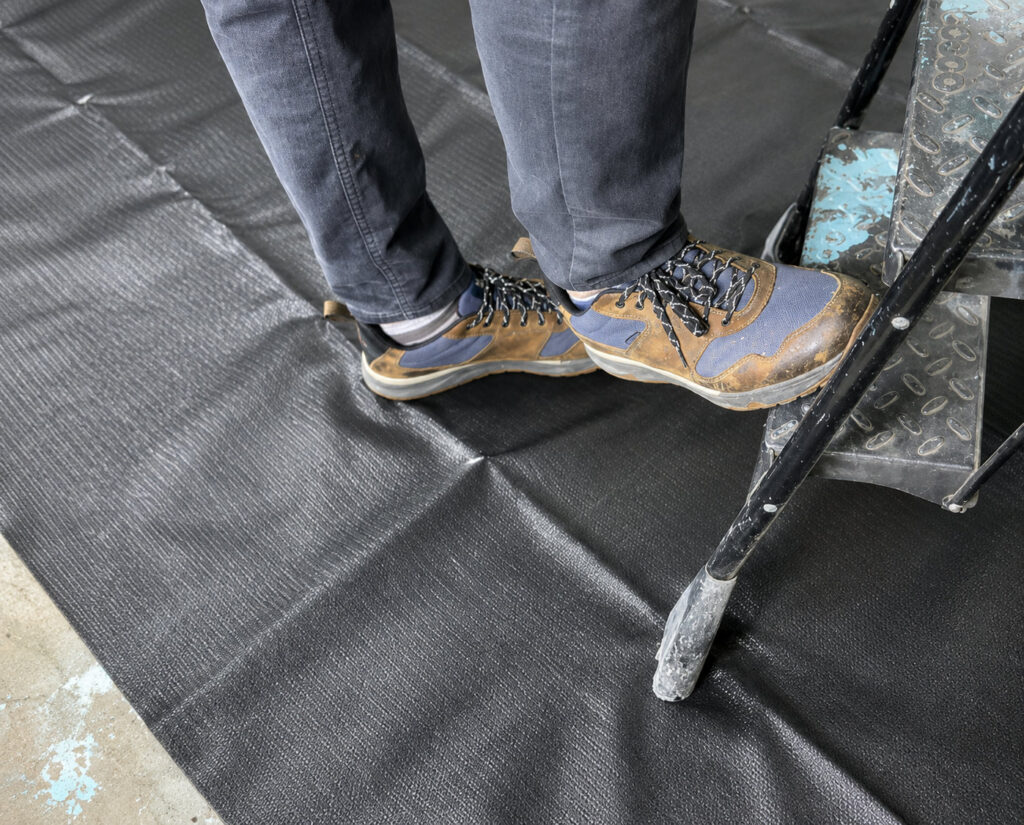
Ready Tread uses a textured surface designed for underfoot traction and a heavier 23 mil construction that can handle the tools, paint cans, ladders, and movement that come with a painting project.
And because the material is waterproof, spills stay on the tarp instead of soaking through to the flooring below.
Carpet
With carpet, coverage is especially important.
Paint can work its way into exposed edges quickly, so choose a tarp large enough to protect the entire active work area. If multiple pieces are necessary, overlap them so there aren’t open gaps as you move around the room.
For either surface, it’s worth checking your coverage before opening the first paint can. Moving protection around halfway through a project is much harder once paint, tools, and ladders are already in the room.
What Kind of Tarp Should You Use for Spray Painting?
Spray painting changes the equation because you aren’t only protecting the area directly beneath the project.
Overspray can travel beyond your immediate work zone, which means coverage area becomes especially important.
Before spraying, think about:
- The floor underneath and surrounding the project
- Nearby furniture or equipment
- Walls and surfaces outside the intended spray area
- Doors, walkways, or other openings where overspray could travel
For smaller spray projects, one tarp may be enough. Larger projects may require multiple overlapping tarps or a substantially larger tarp to create a wider protected area.
This is where Renegade’s larger Contractor Grade Tarps can be useful. Sizes including 10′ x 10′, 12′ x 9′, and 20′ x 12′ provide more coverage for larger work zones, furniture, equipment, and spray-painting projects.
The goal isn’t simply to put something underneath the project. It’s to create a protected zone around it.
What Size Painter’s Tarp Do You Need?
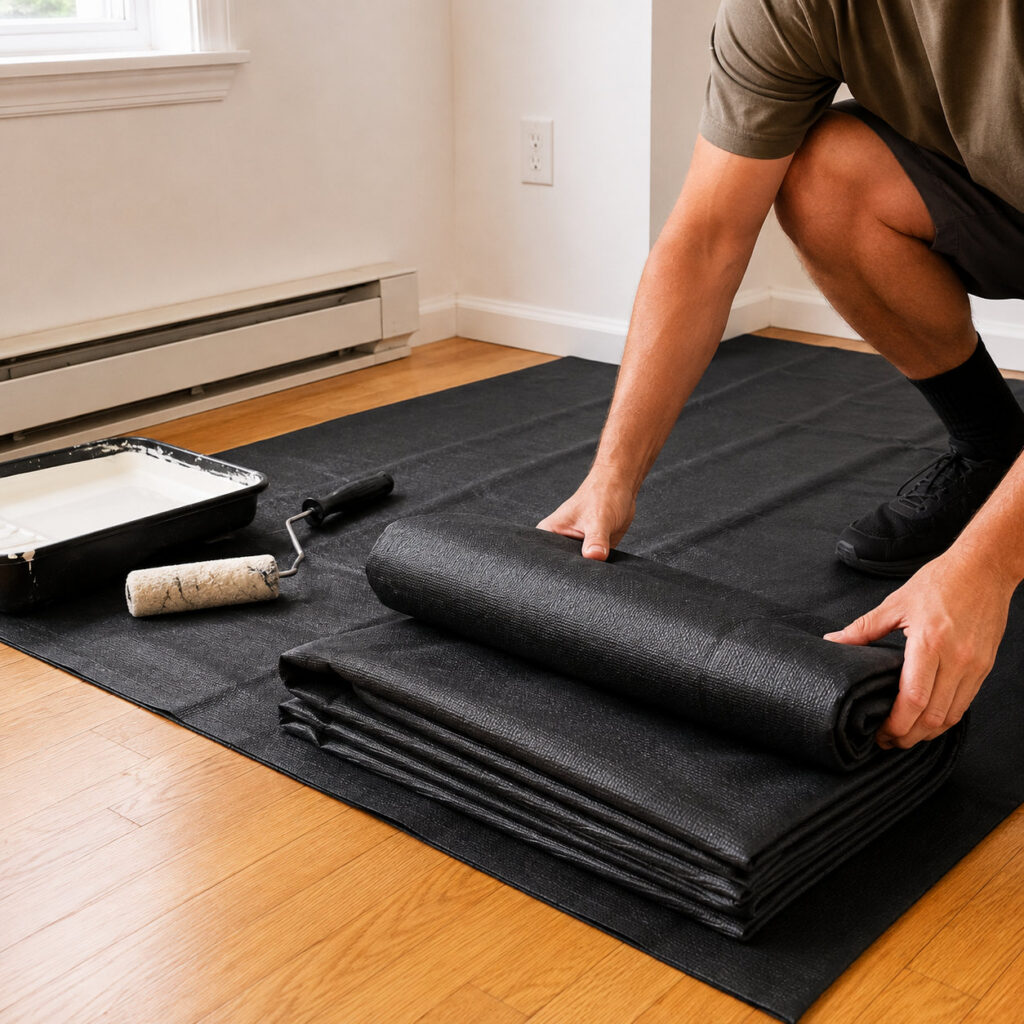
There isn’t one ideal painter’s tarp size for every job.
A better way to choose is to start with what you’re protecting:
| Painting Project | Coverage to Consider |
|---|---|
| Small touch-ups, cabinets, or crafts | Small tarp |
| Hallways and narrow work areas | Runner-style coverage |
| Standard room | Medium floor covering |
| Large room or furniture | Large tarp |
| Spray painting or commercial spaces | Large or overlapping coverage |
Whenever possible, give yourself a little extra coverage beyond the immediate painting area. Paint has an impressive ability to land six inches past wherever you thought it possibly could.
For larger projects, overlapping multiple pieces can also be easier to manage than wrestling one oversized tarp around furniture, corners, and doorways.
Tarp vs. Canvas Drop Cloth: Which Is Better for Painting?
Canvas has been a staple on painting jobs for decades, and its weight helps it stay in place. But it isn’t automatically the best choice for every project.
Canvas absorbs paint rather than creating a completely non-absorbent barrier. It can also become heavier as it collects moisture, paint, and debris over repeated use.
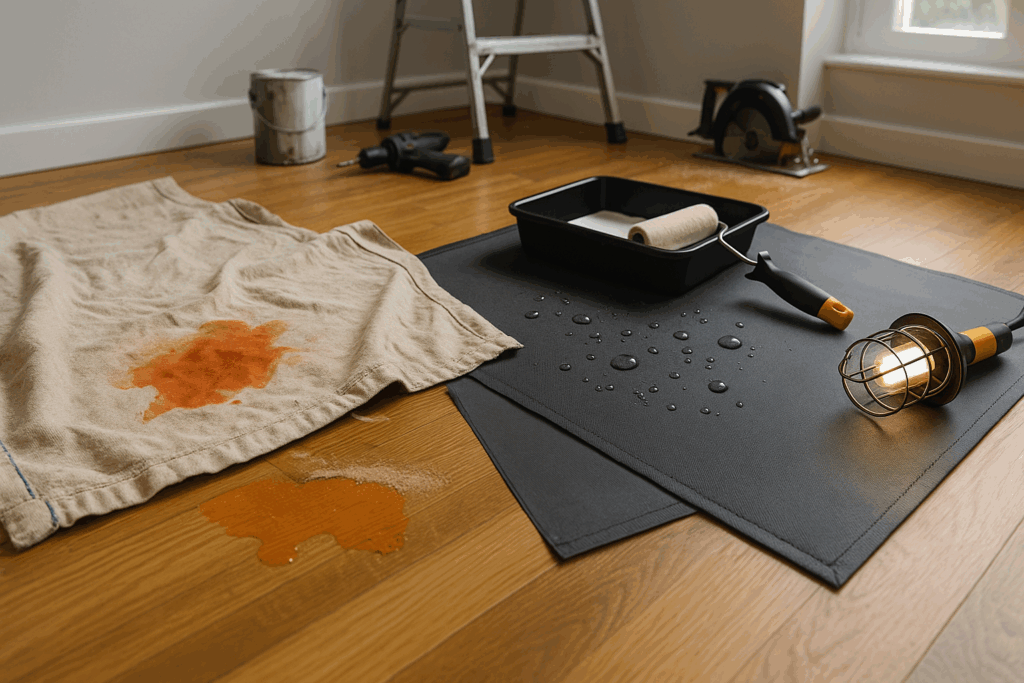
Waterproof tarp and drop cloth materials work differently: instead of absorbing a spill, they keep it on the surface so it can be cleaned up before it reaches the flooring underneath.
There are tradeoffs to both materials, so the right choice depends on the surface, project, and how you prefer to work.
Comparing canvas specifically? Read our complete guide to canvas drop cloths and the alternatives available for painting projects.
5 Ways to Get Better Coverage From Your Painter’s Tarp
No matter which type of tarp you choose, a few simple setup decisions can make the job much easier.
1. Plan your coverage before you start
Place your tarp before bringing in ladders, trays, and open paint cans. Think through where you’ll be walking and where your tools will sit.
2. Protect beyond the immediate work area
Drips rarely fall straight down. Give yourself extra coverage around paint trays, ladders, and high-traffic areas.
For spray painting, expand that protected area even farther to account for overspray.
3. Secure edges where necessary
Painter’s tape, weights, furniture placement, or tarp attachment points can help keep coverage from moving as you work.
Just make sure anything you use to secure the tarp is appropriate for the flooring or surface underneath.
4. Overlap multiple tarps
If one tarp doesn’t cover the entire area, overlap the edges rather than placing them directly beside one another. That helps eliminate small exposed gaps where spills can find their way through.
5. Clean it before the next project
Paint chips, dust, and debris left on a tarp can transfer onto the next surface you’re trying to protect.
Let the tarp dry completely, remove loose debris, and clean it according to the manufacturer’s instructions before storing it for the next job.
Why Renegade Made a Drop Cloth Specifically for Painting
Traditional tarps are great at covering a lot of things. That doesn’t necessarily mean they’re optimized for spending an entire day underneath your feet.
That’s why we created Ready Tread.
It uses the same polypropylene-based material approach found throughout Renegade products, but with a heavier 23 mil construction and textured surface designed specifically for floor protection and foot traffic.
Ready Tread is:
- Waterproof
- Reusable
- PFAS free
- PVC free
- BPA free
- Built without metal grommets
- Accepted through Renegade’s take-back recycling program at the end of its useful life
It’s designed for painters, contractors, DIY projects, and anyone who would rather spend their time painting the room than worrying about what’s happening underneath the drop cloth.
Painter’s Tarp FAQ
Can you use a tarp instead of a drop cloth for painting?
Yes. A waterproof tarp can work well for painting, particularly when you want a non-absorbent barrier between paint and the surface underneath. The best option depends on the tarp’s thickness, surface texture, durability, and the type of project.
What size tarp do I need to paint a room?
Choose a tarp large enough to cover the active work area with additional space around your ladder, paint tray, and supplies. Standard rooms may only require one medium-sized covering, while larger rooms may be easier to protect with multiple overlapping tarps.
Can you use a painter’s tarp on hardwood floors?
Yes, but choose carefully. Look for a clean, non-abrasive covering that provides a moisture barrier and stays stable while you work. Always remove debris underneath the tarp before placing it on hardwood, since trapped grit can scratch the finish.
What should I put down when spray painting?
Use enough tarp or protective covering to create a wider work zone around the item being sprayed. Overspray can travel beyond the immediate project, so protect nearby floors, furniture, equipment, and other surfaces as necessary.
Is canvas or a waterproof tarp better for painting?
Both have advantages. Canvas is heavier and naturally stays in place, while waterproof synthetic tarps prevent liquid from soaking through. Your flooring, project size, expected spills, and cleanup preferences should guide the decision.
Can painter’s tarps and drop cloths be reused?
Renegade Tarps and Drop Cloths are designed to be reused across multiple projects when properly cared for. After use, clean off paint and debris, allow the material to dry completely, and inspect it for damage before storing. Very thin plastic and disposable paper coverings typically have a much shorter useful life.
Protect the Floor. Then Forget About It.
The best painting protection isn’t the one you spend the most time thinking about. It’s the one you can put down, work over, clean up, and use again.
For smaller rooms, hallways, and high-traffic floor protection, explore Renegade Ready Tread Drop Cloths. For larger painting projects, furniture, spray zones, and bigger work areas, Renegade Contractor Grade Tarps provide additional coverage without relying on disposable plastic sheeting.


Interested in Our Fabrics?
Contact Us