
Fall cleanup can look simple… until you’re halfway through the yard and surrounded by piles, bags, and wet debris. A heavy-duty leaf tarp gives you a practical way to rake, drag, and consolidate leaves (and other yard waste) with fewer trips and less mess.
In this guide, you’ll learn what to look for in a quality leaf tarp, how to choose a size that fits your space, and how to keep it performing season after season.
4 Reasons Why the Right Leaf Tarp is the Superhero of Raking
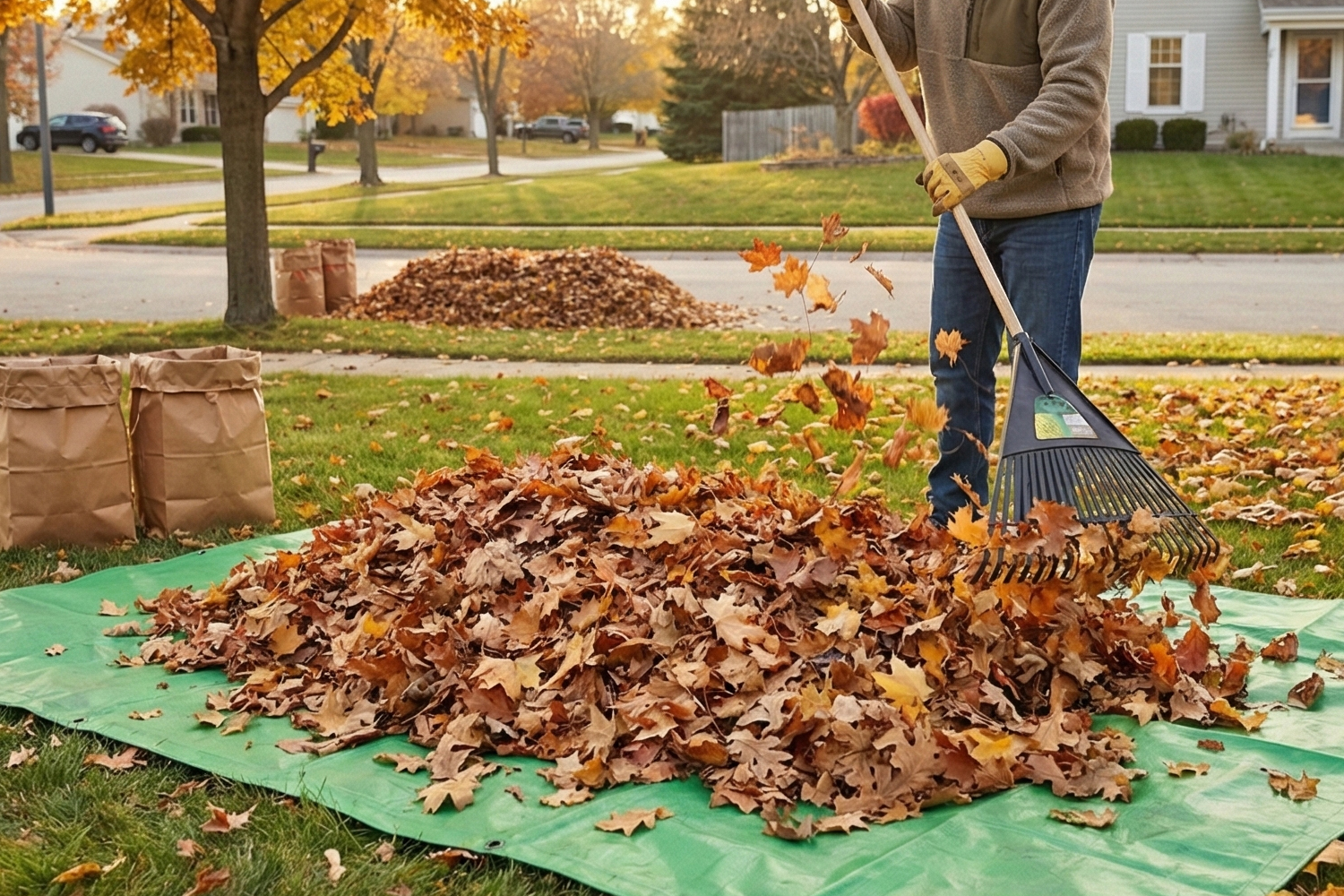
A leaf tarp works like a mobile collection bin: you pile debris once, move it once, and keep your yard cleaner along the way. Here are four practical reasons a tarp can make raking season faster and easier:
1. Eliminates Countless Bag Trips (& Bag Waste)
By raking directly onto a tarp, you can move a large volume of leaves to the curb or compost area in one load instead of filling and carrying multiple bags. Fewer bags also means less mess from torn paper or plastic and less waste to dispose of.
2. Turns Cleanup into a Drag-and-Done Operation
Instead of shoveling leaves into a wheelbarrow, you can grab the corners or handles and pull the load where it needs to go. This reduces lifting and repeated bending, which can make cleanup easier on your back and shoulders.
3. Handles Branches and Wet Debris Without Breaking
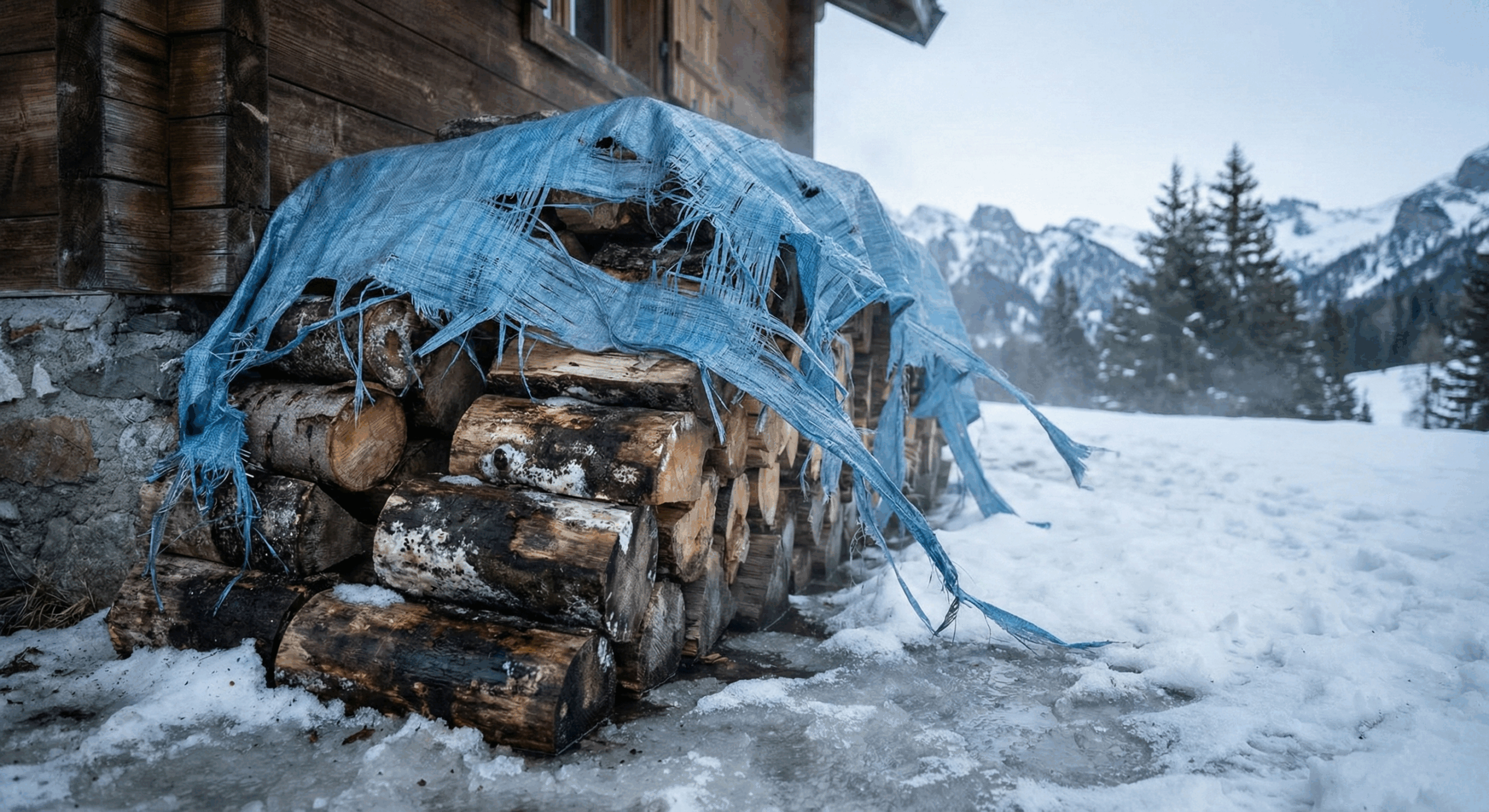
Wet leaves and small branches put a lot of stress on seams and corners, where lightweight tarps tend to fail first. A true heavy-duty tarp is built to resist punctures and tears, so it holds together through dragging and uneven loads.
4. Works as Your Staging Area for Smarter Yard Work
Spread the tarp where you’re working and use it to keep piles contained while you trim, rake, or blow leaves. It also makes it easier to separate sticks from leaves, stage tools, and keep debris off patios, decks, and driveways.
9 Additional, Year-Round Uses for Your Leaf Tarp
Once you have a durable tarp on hand, it quickly becomes one of the most useful tools in the garage or shed. These are a few practical, year-round ways to put a leaf tarp to work beyond fall cleanup:
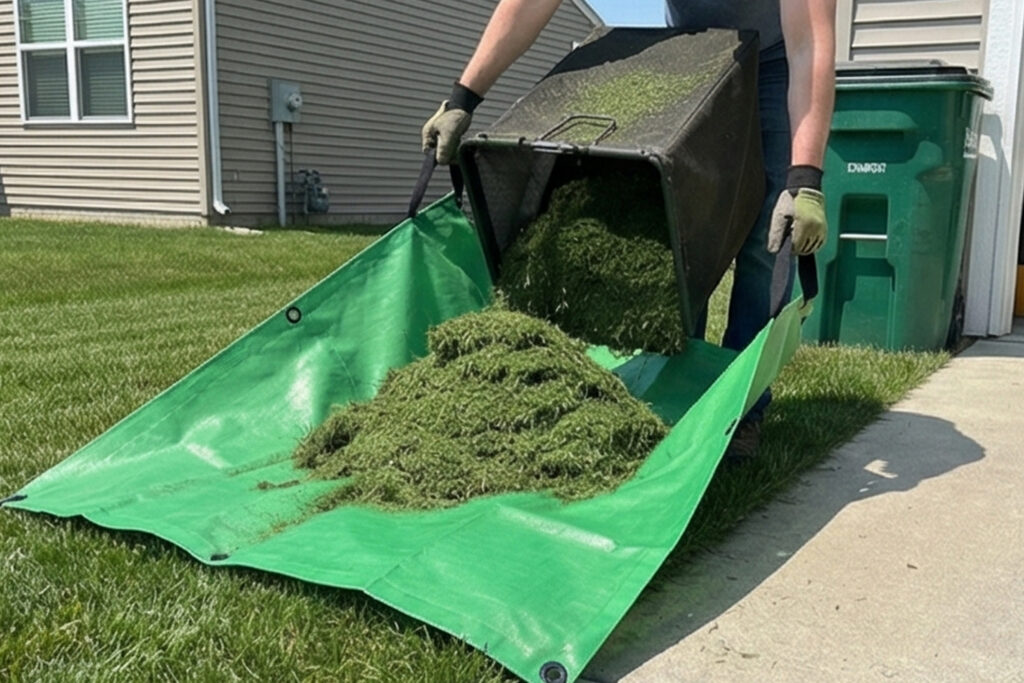
1. Collecting grass clippings during lawn mowing
Use the tarp as a quick transfer surface for clippings, then drag them to a compost bin or disposal area without scattering material across the lawn. It also helps keep clippings off patios and walkways, making cleanup faster after mowing.
2. Gathering pruning debris and branch trimmings
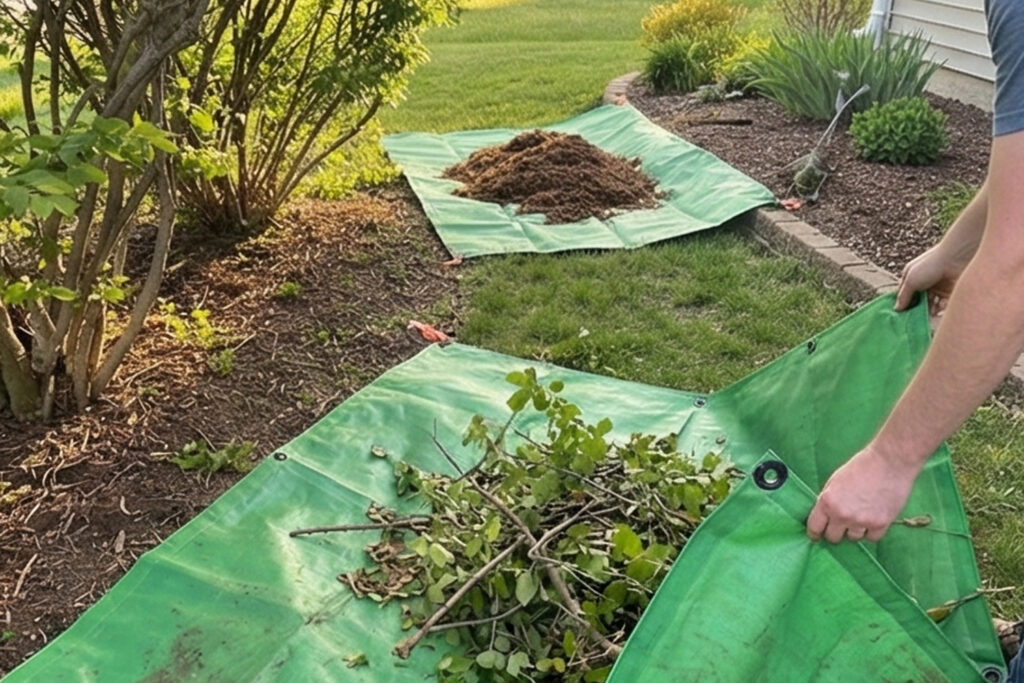
Lay the tarp under shrubs or trees before pruning so branches and trimmings land in one spot. When you’re done, fold the edges inward and carry or drag everything to your compost pile or brush collection area.
3. Hauling mulch or soil from delivery pile to garden beds
For smaller loads, a tarp can function as a lightweight alternative to a wheelbarrow, especially on soft ground where wheels sink in. It helps contain spills and can protect driveways or lawns when moving material from a delivery pile.
4. Protecting plants and shrubs during harsh weather
In a pinch, a tarp can serve as temporary protection during short periods of frost, hail, or high wind when you need to shield tender plants. Avoid sealing it tightly around foliage; allow airflow and remove it once conditions improve to prevent overheating or moisture buildup.
5. Creating a clean workspace for potting plants or garden projects
Spread the tarp on a patio or lawn to create a clean, contained area for potting, repotting, or mixing soil amendments. When you finish, you can pour leftover soil back into bags and rinse the surface clean.
6. Covering compost piles to retain moisture and heat
A loose cover can help compost retain moisture and warmth while protecting it from heavy rain that can saturate the pile. Keep the cover vented or partially open so oxygen can still reach the compost and odors don’t build up.
7. Collecting pine needles and pine cones
Pine needles and cones are lightweight and prone to blowing around, so collecting them on a tarp keeps them contained. It also makes it easier to transport the material for composting, mulching paths, or curbside disposal.
8. Protecting lawn areas during construction or renovation projects
Place the tarp under small projects to catch fasteners, sawdust, soil, or debris before it gets ground into the grass. For short-term protection, it can also help reduce turf damage from repeated foot traffic in a work area.
9. Storing and organizing seasonal yard equipment and tools
Use the tarp as a base layer to keep rakes, blowers, and bins together and off damp ground during storage. For seasonal transitions, you can wrap or cover equipment to reduce dust and protect surfaces in a shed or garage.
What Actually Makes a Leaf Tarp “Heavy Duty” (Spoiler: It’s Not Just Thickness)

The term “heavy duty” gets used loosely, but a tarp’s real-world performance comes down to how it is built and what it is made from. Focus on construction details that influence tear resistance, puncture resistance, and how the tarp holds up after repeated use.
1. Material composition and weave density
Woven fabrics with higher yarn density and a durable coating typically resist tearing better than thin, loosely woven sheets. Material type matters, too: coated polypropylene fabrics are often lightweight and strong, while basic polyethylene tarps can be inexpensive but less durable under repeated dragging.
2. Reinforced edges with double-stitched or heat-sealed hems
The hem is where most failures start, especially when you drag a loaded tarp or tie it down. Reinforced hems spread force across more material, reducing the chance of fraying and seam splits.
3. Grommet placement, quantity, and reinforcement backing
Grommets should be evenly spaced and backed by reinforcement so the surrounding fabric doesn’t tear out under tension. More attachment points also lets you distribute load and secure the tarp for windy conditions or angled hauling.
4. UV stabilization and weather-resistant coatings
Sunlight can make lower-quality tarps brittle over time, especially if they are left outdoors for long periods. UV-stabilized coatings and weather-resistant finishes help the tarp stay flexible, waterproof, and usable across multiple seasons.
5. Handle design and load-bearing capacity
If you plan to drag leaves or debris, handles (or reinforced grab points) can make a major difference in control and comfort. The best designs anchor the handle into the hem or a reinforced patch so it can take repeated pulling without ripping out.
Comparing Premium Leaf Tarps vs. Big Box Store Basics: What’s the Difference?
Not all tarps are built for the same job; and the price tag doesn’t tell the whole story. This side-by-side breakdown shows how a premium, engineered tarp stacks up against canvas and big-box blue basic tarps.
| Attribute | Premium Renegade Tarp | Canvas Tarp | Generic Blue Tarp |
| Material Construction | Heavy-duty polyethylene with reinforced weaving for maximum tear resistance. | Natural cotton/poly blend that’s breathable but absorbs water. | Thin polyethylene that rips easily under sharp debris. |
| Edge Reinforcement | Thermally welded, reinforced edges that withstand repeated dragging. | Hemmed sewn edges with moderate durability but prone to fraying over time. | Basic heat-sealed edges that fray and separate quickly, occasionally reinforced with rope. |
| Grommet Quality | Rust-resistant grommets made from recycled fabric. | Metal grommets that can rust over time with moisture exposure. | Lightweight grommets that tear out under load. |
| UV Resistance | UV-stabilized coating protects against sun damage and brittleness. | Moderate UV resistance but fabric weakens with. prolonged sun exposure. | Thin UV treatment degrades quickly and becomes brittle after one season outdoors. |
| Weight Capacity | Designed to haul heavy loads of wet leaves and dense debris. | Strong when dry but becomes extremely heavy and unwieldy when wet. | Struggles with anything beyond light, dry materials. |
| Lifespan | Multi-season durability with proper care. | 2-3 seasons with careful maintenance and dry storage. | Single-season use before replacement needed. |
| Availability | Ships directly to your door. | Available at specialty suppliers and hardware stores. | Widely available year-round at most retailers. |
From Picking Up Sticks to Piling Leaves: Find Your Perfect Leaf Tarp Size
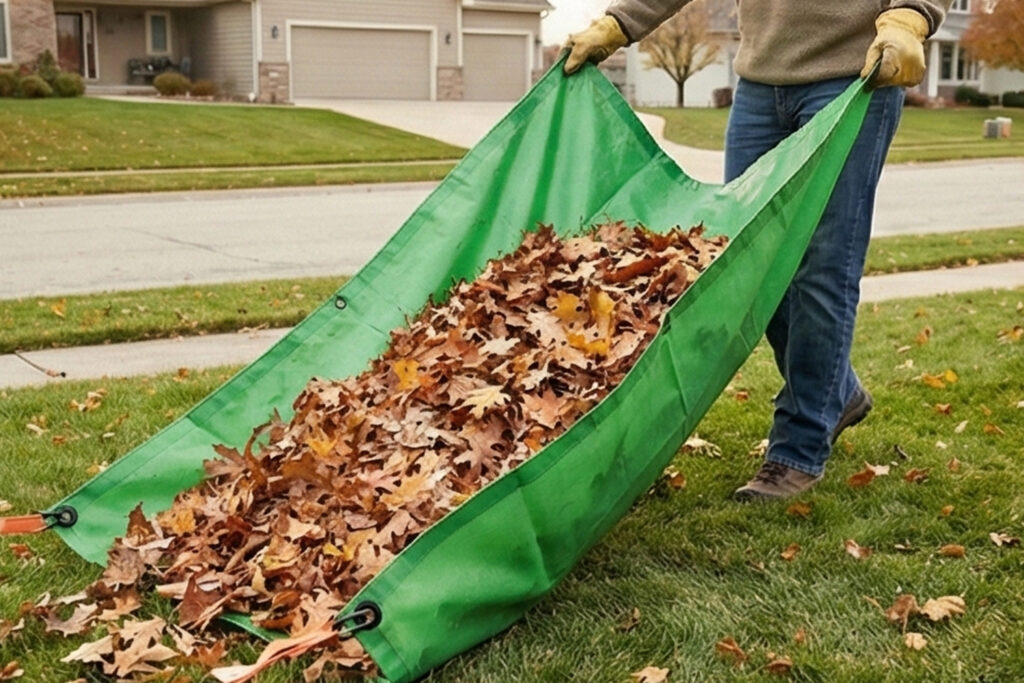
Size is about more than coverage; it affects how easy the tarp is to carry, drag, fold, and store. Start with the area you typically clean at once and how far you need to move debris, then choose the biggest size you can handle safely when it’s loaded.
This compact size works well for small yards, patios, and garden beds where you’re doing quick pickups of leaves, clippings, or light brush. It’s easy to drag solo and simple to store in a car trunk or small shed.
A versatile mid-size option for many homeowners, this tarp gives you enough surface area to build a meaningful pile without becoming awkward to handle. It’s a good fit for routine leaf pickup and hauling yard debris to a curb or compost area.
If you have a larger yard or heavier leaf drop, this size gives you more room to rake and consolidate without constantly stopping to empty the load. It also works well as a staging area when you’re trimming branches or cleaning up after a storm.
For big properties or larger cleanups, a 20′ x 12′ tarp can reduce the number of trips by holding a much larger volume of material. Because loads can get heavy quickly, it’s best to fill it in smaller batches or use two people when dragging.
5 Care Hacks That Keep Your Leaf Tarp Hauling for Years

A quality tarp is designed for hard work, but a few simple habits can make it last significantly longer. Use these care tips to reduce wear and keep the material performing season after season:
1. Rinse and dry thoroughly after each use to prevent mold and mildew buildup
Leaves, sap, and soil hold moisture and organic residue that can encourage mildew during storage. A quick rinse, followed by full air-drying, keeps the tarp cleaner and helps prevent odors or staining from setting in.
2. Fold (don’t crumple) and store in a cool, dry place away from direct sunlight
Folding along natural seams reduces sharp creases that can weaken coatings over time, and it makes the tarp easier to deploy next season. Store it dry and out of direct sun (such as in a garage or storage bag) to limit UV exposure and heat-related aging.
3. Avoid dragging loaded tarps across concrete, asphalt, or abrasive surfaces
Rough surfaces can abrade coatings and wear down reinforced edges faster than dragging across grass or soil. If you need to move debris over pavement, lift the load, use a cart, or place a sacrificial layer underneath to reduce friction.
4. Inspect grommets and reinforced edges regularly for early signs of wear
Small tears near a grommet or along a hem can spread quickly once the tarp is under tension. Regular inspections let you repair minor issues early and avoid a full failure mid-job.
5. Keep sharp objects and branches centered on the tarp to protect edges during hauling
When sharp sticks ride along an edge, they can puncture the tarp or wear down the hem as you pull. Keep branches centered and fold the edges inward around the load when possible.
4 Bonus Tarp Features to Look For (That Make a Huge Difference)
Beyond basic size and material, a few design features can noticeably improve safety and ease of use. Here are four details worth checking before you buy or before you put a tarp into heavy rotation:
- Reinforced grommets and their role in secure tie-downs and hauling
Reinforced grommets reduce the chance of tear-out when you cinch the tarp down or use it as a hauling sling. They also give you more secure tie-down options for windy conditions, trailers, or temporary covers.
- Built-in handles vs. rope loops: which design works best for heavy loads
Built-in handles are typically faster and more comfortable for dragging, especially with wet leaves, because they provide a wider grip surface. Rope loops can work, but they can concentrate force on a smaller area; look for designs that distribute load through reinforced stitching or patches.
- Reinforced edges and hemmed borders that prevent fraying and ripping
Hemmed, reinforced borders help stop small nicks from turning into long rips, especially when the tarp is repeatedly dragged and folded. Extra reinforcement at corners is a plus, since corners take the most stress during hauling and tie-down.
- Tarp thickness (mil rating) and what it means for durability and weight
Thickness can be helpful, but it’s not a complete measure of strength – two tarps with the same mil rating can perform very differently. Consider overall fabric weight, reinforcement, and intended use so you get a tarp that’s durable without being unnecessarily stiff or heavy.
5 Things Homeowners & Contractors Ask About Heavy Duty Yard Tarps
Leaf tarps are simple tools, but the best results come from matching the tarp to your yard, your debris, and how you plan to move it. These quick answers cover common questions homeowners and contractors ask when choosing and using a heavy-duty yard tarp:
1. What size leaf tarp do I need for my yard?
A good starting point is to choose a size that lets you rake a reasonable section of the yard into one load without making the tarp too heavy to move. For many yards, 10′ x 8′ or 12′ x 9′ is a practical balance; larger properties may benefit from 20′ x 12′ if you can manage the load.
2. Can I use a tarp for wet leaves, or will it get too heavy to drag?
Yes, but wet leaves can become heavy quickly, so plan to haul smaller loads and avoid overfilling the tarp. If possible, let water drain off before moving the load, and use handles or two-person dragging to reduce strain.
3. How do I prevent my tarp from tearing on sharp branches and twigs?
Start by removing or placing the sharpest sticks on top of the pile, and avoid dragging over rough surfaces. Choosing a tarp with strong puncture resistance and reinforced hems also reduces the chances of small holes becoming major tears.
4. What’s the difference between. polypropylene, polyethylene, and canvas tarps for yard work?
Polypropylene tarps are typically woven and coated, offering a strong strength-to-weight ratio and good resistance to moisture; they can be a premium, longer-lasting option.
Polyethylene tarps are common and often lower cost, while canvas is breathable but absorbs water, which makes it heavier and more prone to mildew in damp yard conditions.
5. How much weight can a heavy duty tarp handle before it rips?
Weight capacity varies widely based on material, handle design, and reinforcement, so check manufacturer specifications if they are available. In practice, it’s safer to move heavy debris in multiple smaller loads – especially when the material is wet – rather than pushing one oversized haul.
Ready to Make Fall Cleanup Easier? Get Your Heavy-Duty Leaf Tarp Today
To explore leaf tarp sizes, materials, and specifications in one place, visit our online tarp store. You can compare dimensions, weight, and feature details to choose the best fit for your yard, garden, or jobsite.
If you have questions about material performance or end-of-life options, the Renegade team can help point you to the right tarp for your needs.


Interested in Our Fabrics?
Contact Us