
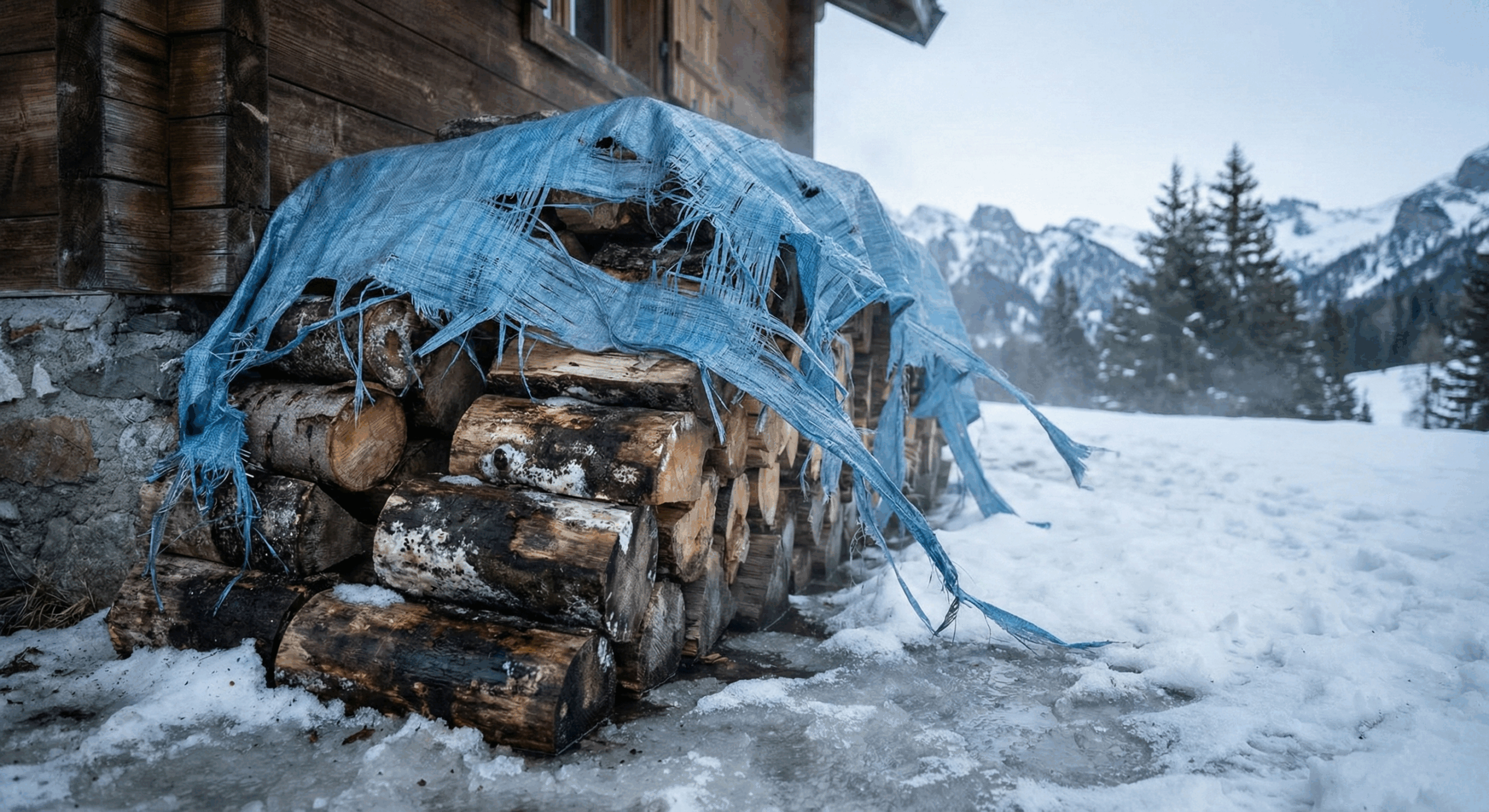
Last winter, one of our customers in Breckenridge discovered their firewood pile had rotted through after a single season under a standard blue tarp. The tarp had disintegrated by March, leaving the wood exposed to snowmelt for weeks. This type of experience is a pattern I’ve seen when homeowners use conventional tarps at elevation across the Rocky Mountains.
The Mountain Environment Challenge
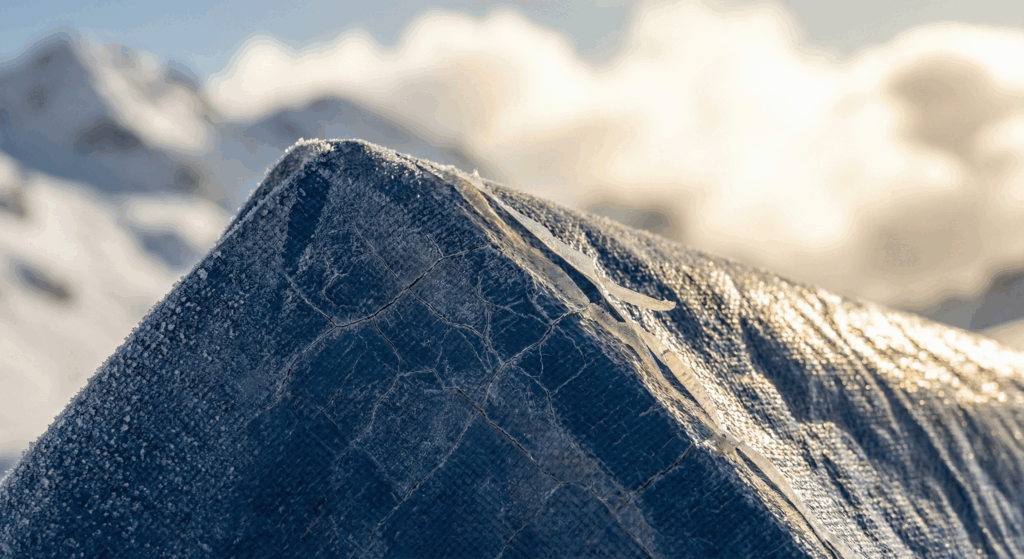
Mountain houses face conditions that accelerate tarp failure. UV exposure intensifies at elevation – for every 1,000 feet gained, UV radiation increases by approximately 4%. A home at 9,000 feet receives significantly more UV than one at sea level. This matters because most blue tarps rely on UV stabilizers that degrade within a single season under these conditions.
Temperature swings compound the problem. A typical winter day in the Rockies can swing 40°F or more between afternoon sun and overnight lows. This thermal cycling causes the thin LDPE coating on conventional tarps to crack and separate from the woven HDPE substrate beneath.
What Happens When Tarps Fail
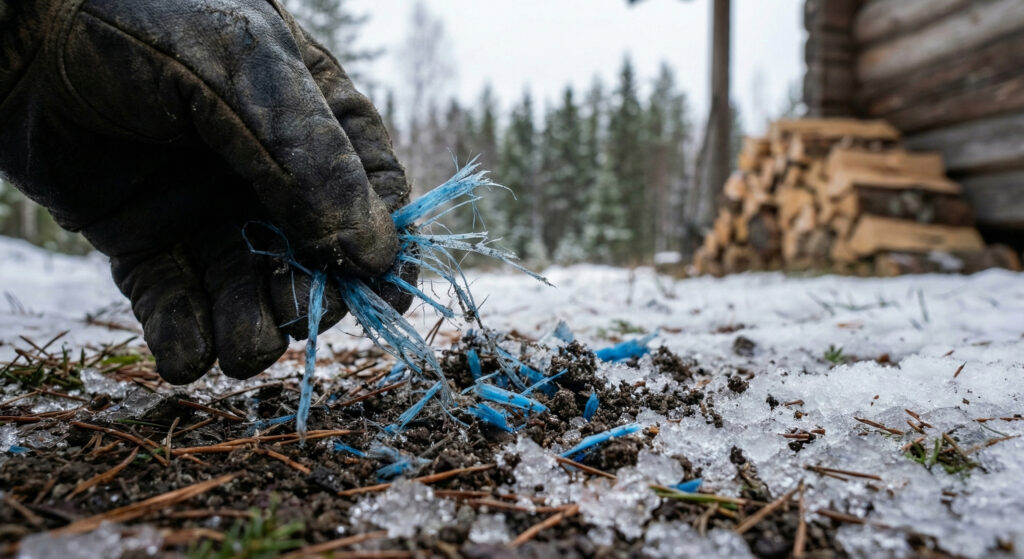
When a tarp degrades, it doesn’t just stop protecting your wood – it creates additional problems. The disintegrating material sheds microplastic fibers across your property. These blue strands persist in soil and groundwater for years. For mountain homeowners who chose their location for its natural beauty, this contamination runs counter to their values.
Exposed firewood absorbs moisture, which reduces its BTU output when burned. Wet wood also produces more creosote, increasing chimney fire risk. A failed tarp therefore creates both environmental and safety consequences.
Selecting the Right Protection
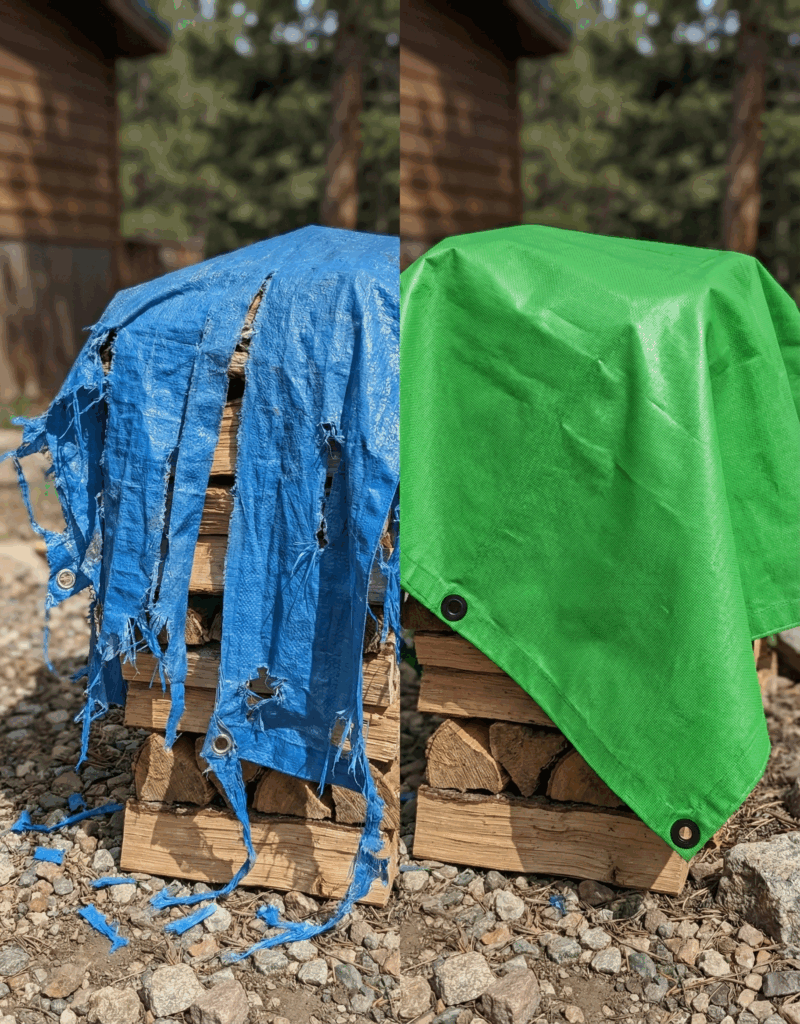
Replace conventional HDPE/LDPE tarps with materials designed for extended UV exposure. Implementation requires evaluating three factors:
- UV stabilization method – Look for stabilizers integrated throughout the material, not just applied as a surface coating
- Material construction – Single-polymer construction (mono-material) resists delamination better than multi-layer composites
- Weight rating – Heavier tarps (measured in GSM or oz/sq yard) generally indicate more durable construction
Polypropylene-based tarps offer advantages for mountain applications. The material handles thermal cycling better than polyethylene and can be manufactured with UV stabilizers distributed throughout the fabric rather than concentrated in a thin surface layer.
Proper Installation for Mountain Conditions
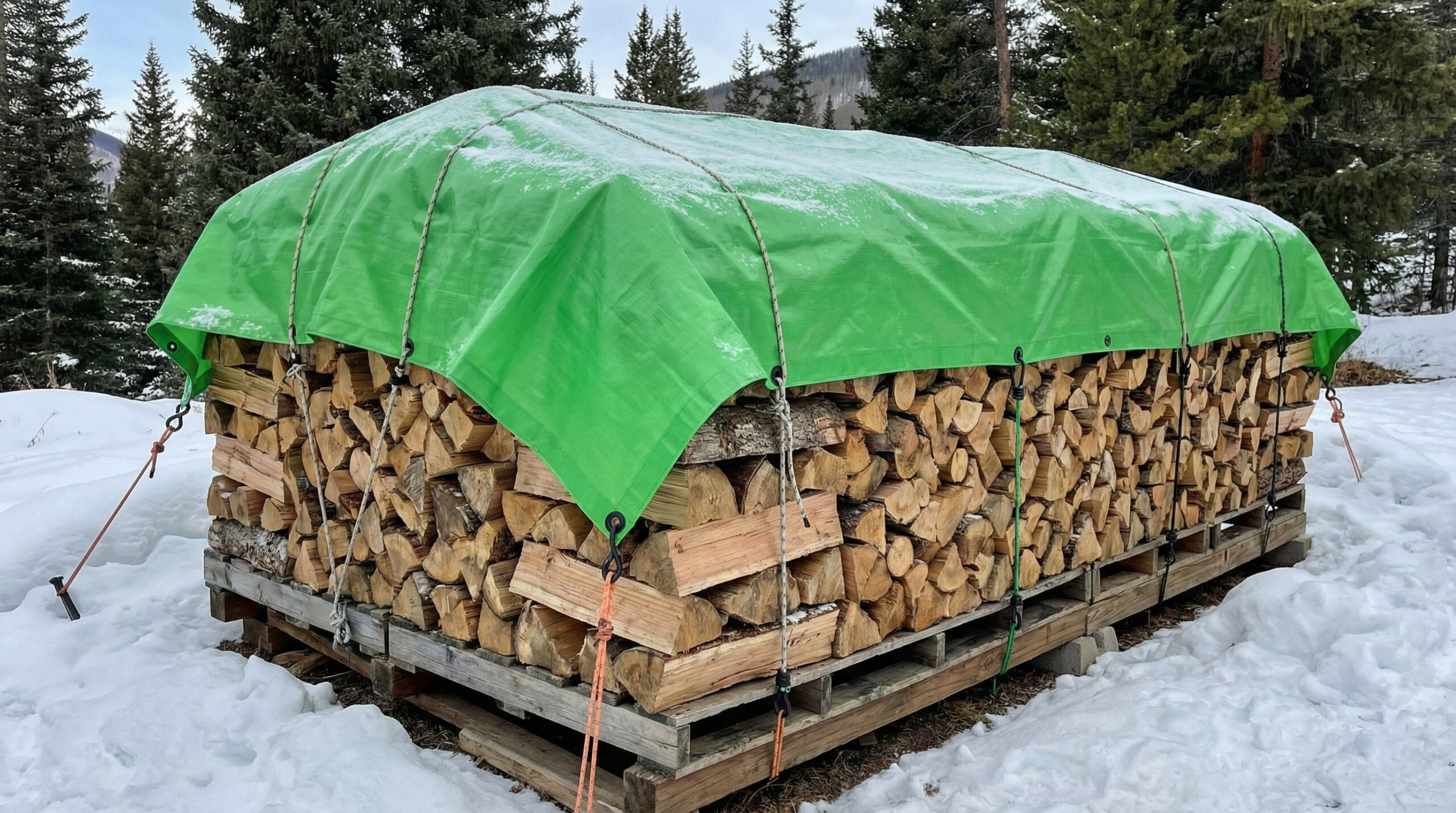
Even durable tarps fail prematurely with poor installation. Secure tarps with enough slack to accommodate snow load without tearing at anchor points. Position the wood pile where afternoon sun can help shed snow accumulation. Elevate the pile on pallets or rails to prevent ground moisture from wicking upward.
The question isn’t whether you need to cover your firewood at a mountain house. It’s whether your current approach accounts for the specific environmental stresses at elevation. Inspect your existing tarp for signs of UV degradation – brittleness, fading, or surface cracking. If present, replace it before the next snow season rather than waiting for complete failure.


Interested in Our Fabrics?
Contact Us