A huge sheet of material. A low price. One less thing headed for the local landfill.
Used billboard tarps check a lot of boxes for farmers, homesteaders, and DIYers. We get the appeal. Finding another job for something that would otherwise be thrown away is a good instinct, but a roadside advertisement and a fish pond ask very different things of a material. So do a billboard and the hay you feed your animals.
Before you spread used billboard vinyl over your garden, across your hay, or into your pond, ask one more question: What else am I bringing home with this bargain?
What’s actually in used billboard vinyl?
Many billboard banners are made from PVC-coated polyester. The polyester provides reinforcement, while the flexible PVC forms the coating. Plasticizers help keep that PVC flexible, and depending on the formulation, those plasticizers may include phthalates.
Then there are the inks and other ingredients used to give the banner its color and performance. Sellers may describe their vinyl as UV protected or mildew resistant, but those labels don’t give you a complete picture of the formulation. With a used banner, you may have no way to trace the original manufacturer, identify the additives, or find testing for your intended use. The advertisement tells you what the billboard was selling. It tells you very little about what you’re buying.
Reusing the material gives it a new job. It doesn’t give it a new formulation.
How outdoor exposure changes used vinyl
An old billboard has already spent time outdoors. Sunlight, heat, moisture, and wear all help determine how much useful life remains in that sheet. As PVC weathers, it can stiffen, crack, and fragment. Plasticizers and other additives can also migrate out of the material. Those processes matter when the next stop is your soil, livestock area, or pond.
The concern has research behind it. A 2025 study of advertising banner materials found that the tested banners released certain additives into the air and also absorbed pollutants from their surroundings. Separate research on PVC microplastics found that UV aging increased the leaching of a common phthalate into water.
That doesn’t tell us what any individual used vinyl banner will release. It does show why its formulation and exposure history deserve attention. A sheet that still holds together can have material questions you won’t answer by looking at it. Then when the plastic starts cracking and shedding, those fragments can become another source of microplastic pollution. Keeping material in use works best when it is still in good condition and suited to its next job.
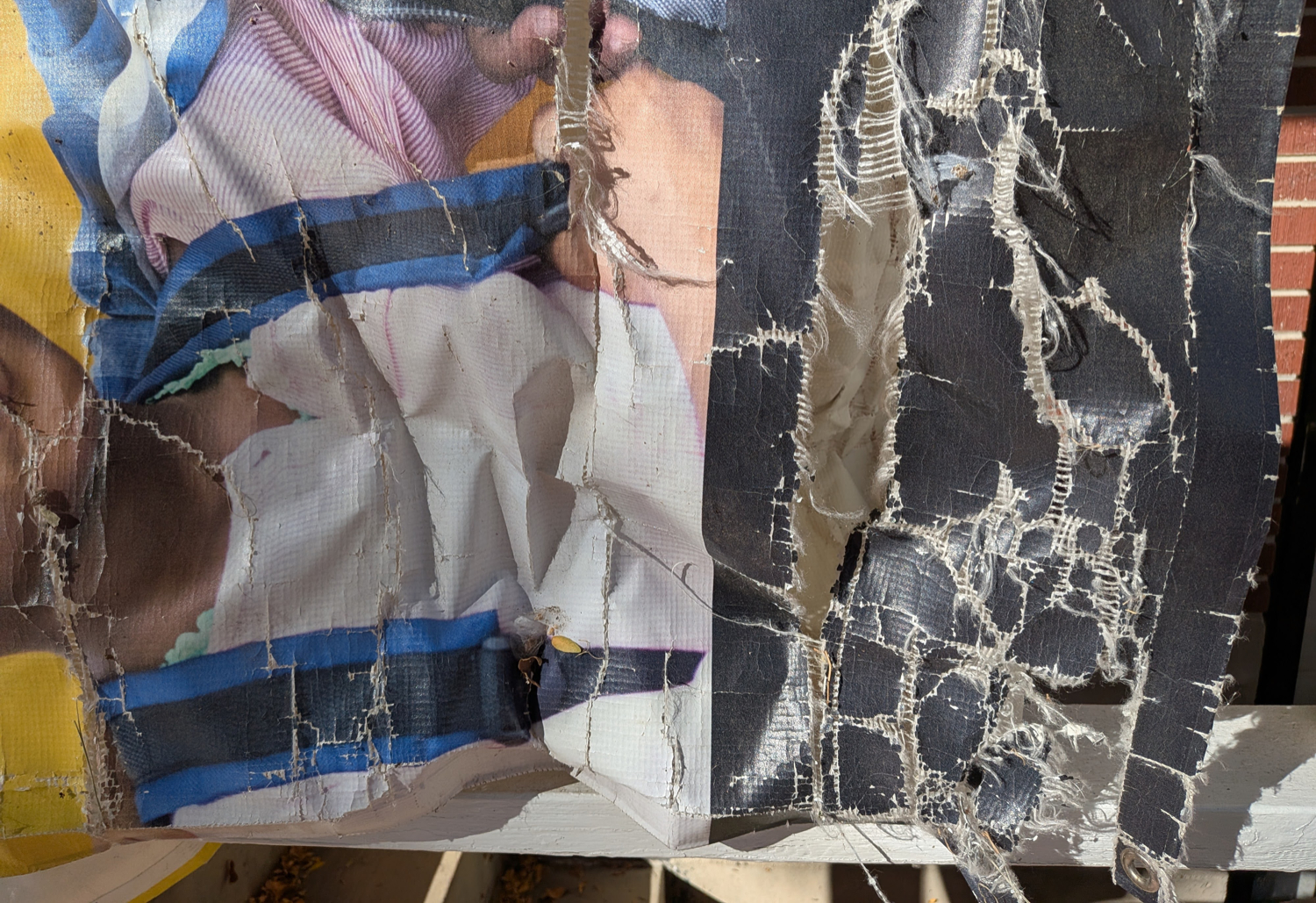
Weathered billboard vinyl with cracked and peeling coating, exposing the woven reinforcement underneath.
Where used billboard tarps make sense
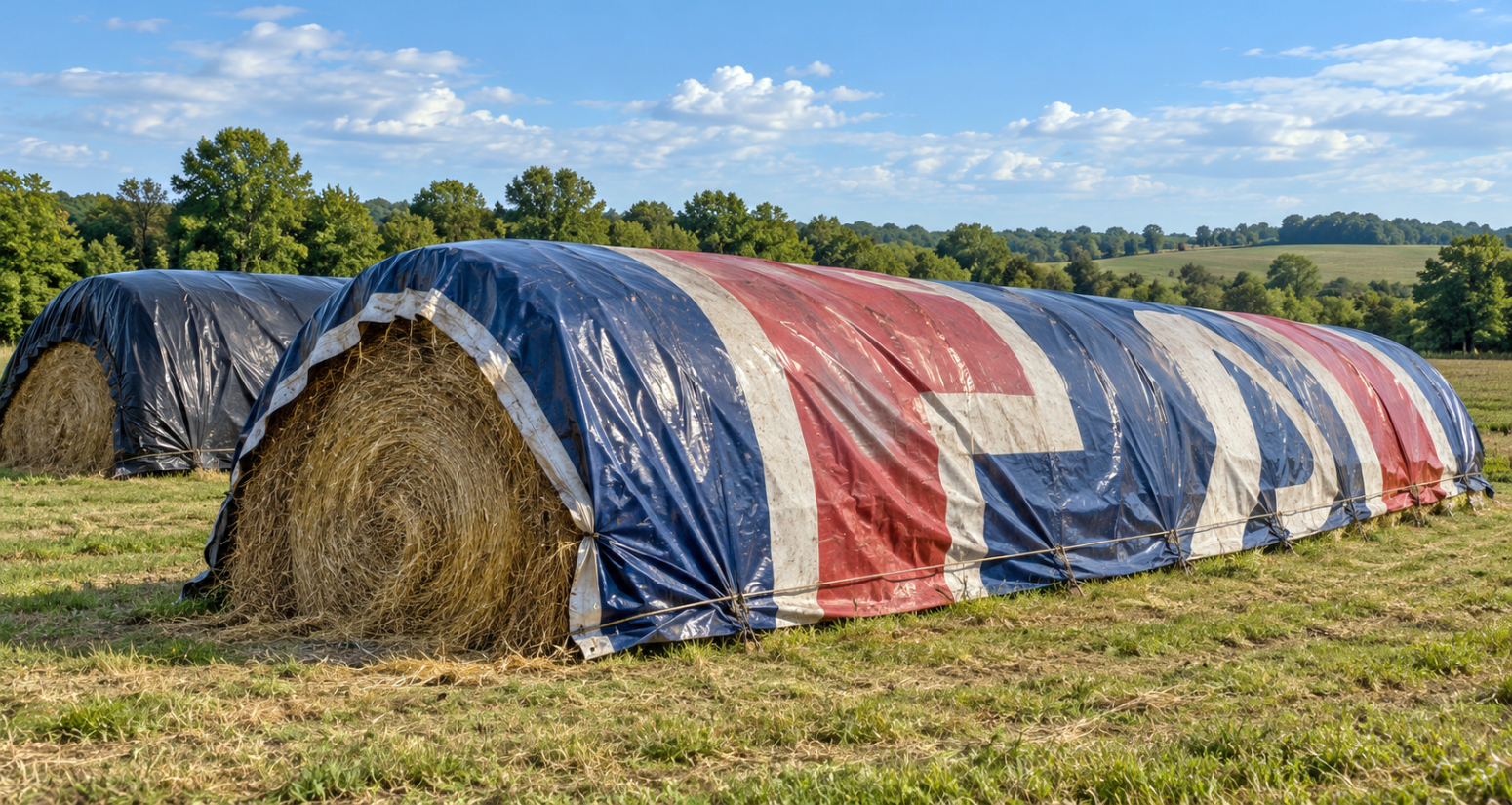
For general coverage, a used billboard tarp in good condition can work. A large sheet can be useful over a woodpile, stored equipment, or building materials, especially if it will stay in one place.
The questions change when the material touches feed, holds water for fish, or sits directly on garden soil. Here’s how we’d think through some common uses:
We’ve heard from customers who chose reused billboard vinyl because they wanted an affordable option that kept material in use. Unfortunately, some later contacted us after reporting sick livestock, fish losses, or concerns about chemicals leaching into their soil.
Customer reports alone don’t establish what caused an illness or fish loss. They do explain why people come looking for a material they can ask specific questions about, with testing to back up the answers. Holding water and being suitable for fish are separate requirements. Likewise, “waterproof” and “mildew resistant” don’t establish suitability for food or crop contact. Any repair tape, sealant, or adhesive you add needs to suit the application, too.
The bargain price is only part of the bill
Used billboard tarps can offer a lot of square footage for the money. They can also come with work you haven’t priced in yet.
Pinholes and repairs
Read the condition disclosures. Some sellers note that used panels may have pin-sized holes or need patching. That is useful information to have before you count on the material to protect hay or hold pond water.
When you receive the billboard tarp, you have to check the full sheet, including folds, edges, and old attachment areas. A waterproof material with a hole in it still leaks.
Grommets and securing the tarp
Some used billboard panels arrive with pipe sleeves around the edges instead of preinstalled grommets. Those sleeves may be worn or damaged from the banner’s previous installation.
Decide how you’ll secure the tarp, then add the hardware, tools, and installation time to your comparison. If you cut a panel down, you’ll also need a plan for its new edges and attachment points.
More coverage means more material to handle
A 14′ x 48′ billboard panel covers 672 square feet, and most are listed at approximately 45 pounds. Weight varies with the material and construction, so check the actual panel you’re buying.
That weight may be manageable for a cover that stays in place. You’ll notice it more when you’re pulling the tarp over a haystack, covering an RV, or folding it up by yourself. Stiff material can make those jobs more awkward, too.
Compare weight per square foot as well as total weight. Our 44′ x 22′ tarp covers 968 square feet and weighs 44 pounds. That’s about 32% less weight per square foot than the 45-pound billboard panel in this example. It also comes with 24 welded grommets already installed. The grommets are welded directly to the tarp, so you can get to work without installing your own.
Remember, a heavier feel doesn’t automatically mean greater strength. The coating, reinforcement, and additives all contribute to fabric weight. We explain how those differences affect performance in PVC vs PP Fabric: Why Heavier Doesn’t Mean Stronger.
Choose your tarp by what you’re protecting
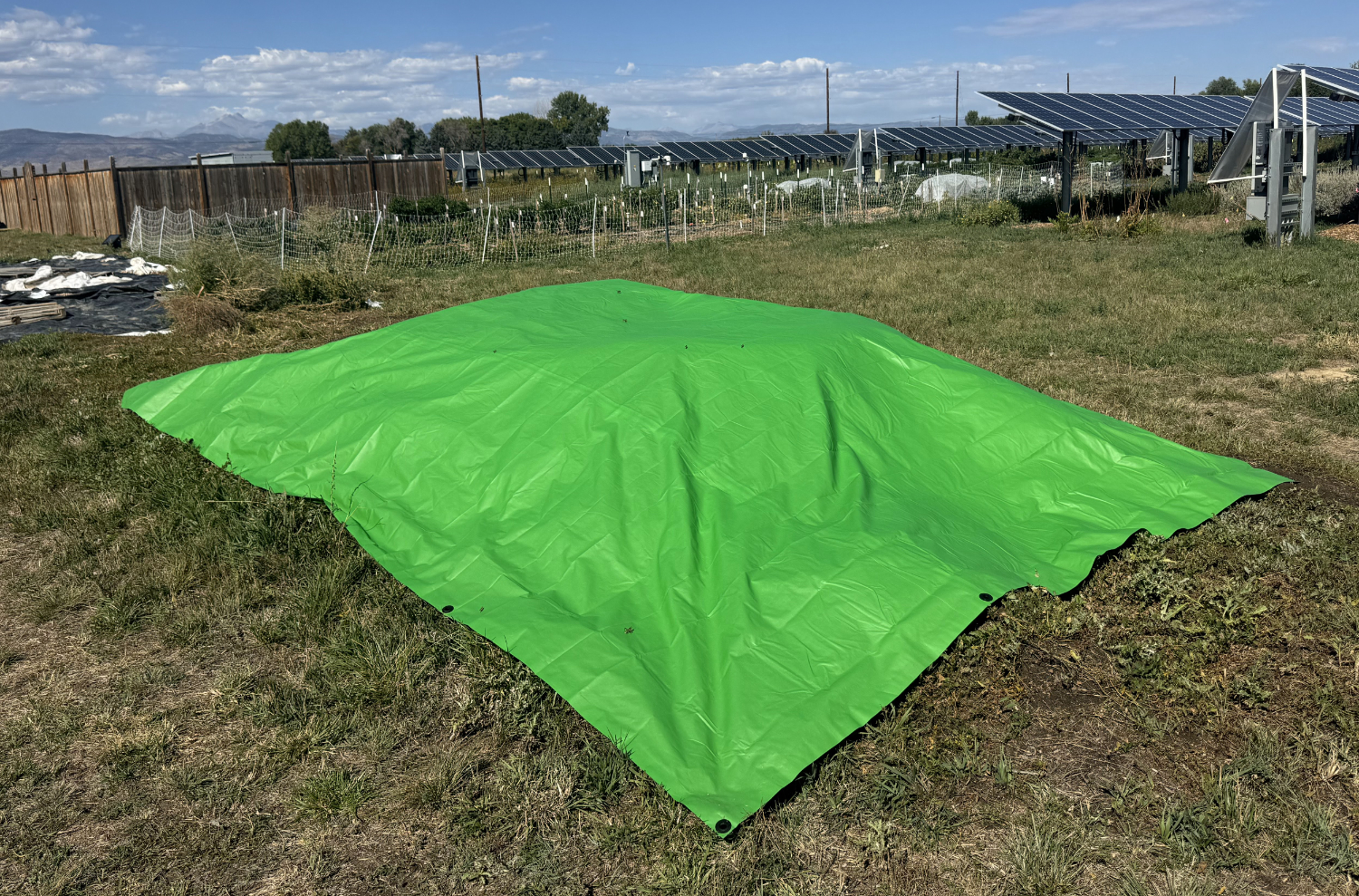
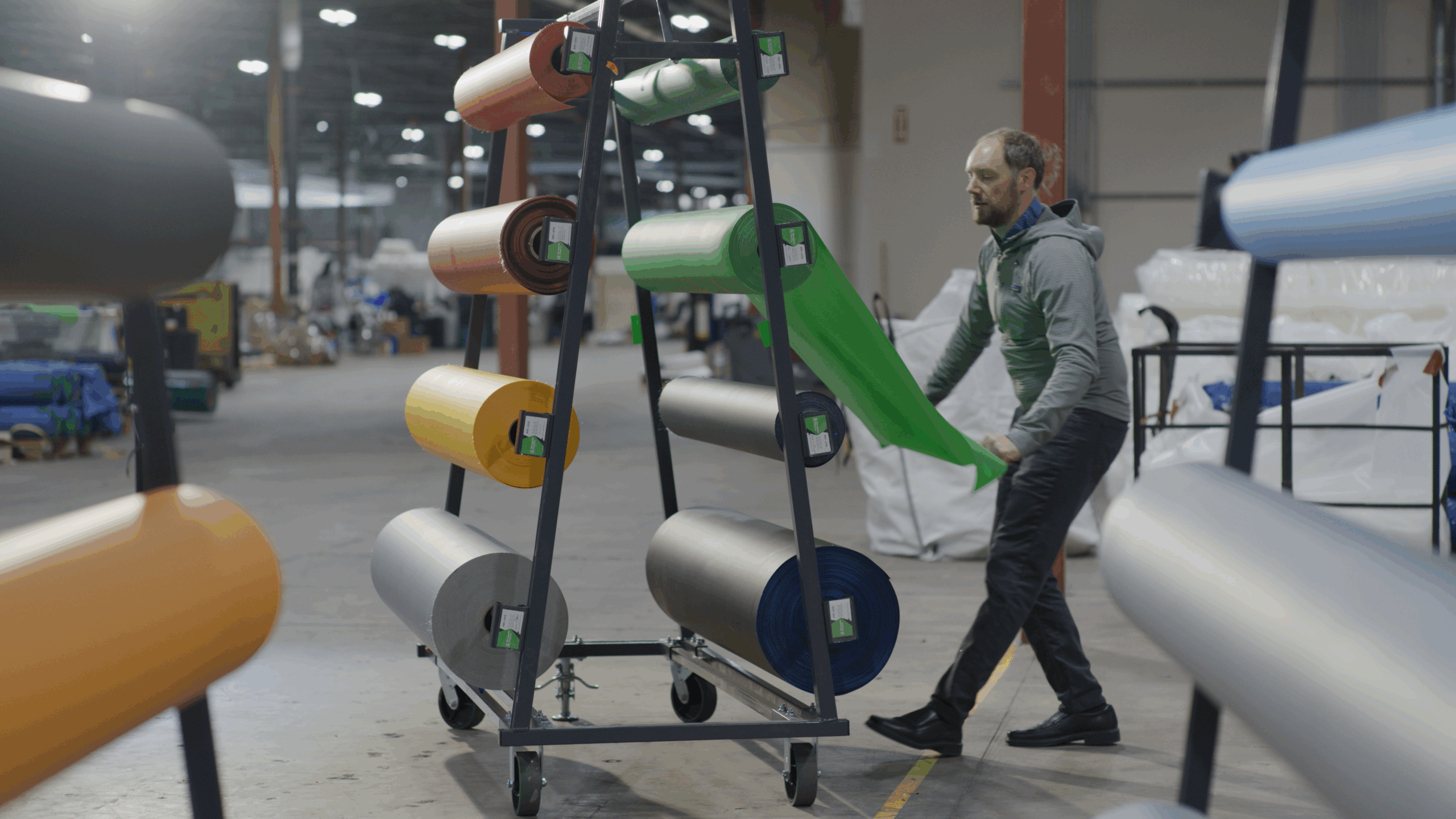
Renegade’s standard tarps use non-toxic, polypropylene-based fabric. They’re free of vinyl chloride, phthalates, lead, and plasticizers. They’re also PFAS-free*. (*PFAS-free means we do not intentionally add PFAS to our products.)
The fabric in our standard tarps has undergone OECD 203 acute fish toxicity testing. In the 96-hour test, water exposed to a fabric sample was found non-toxic to fathead minnows at the concentrations tested. Other Renegade fabric lines, including heavier-duty options, have undergone acute fish toxicity testing, too.
For drinking-water applications, selected Renegade materials and colors are certified to NSF/ANSI/CAN 61. That certification applies to the listed products and configurations. We can help you identify the right option for your application.
More ways to put good material to work
We love resourceful people. Finding another use for good material is part of how we work, too. We turn manufacturing scraps into our tarp grommets, and used Renegade tarps can be returned through our take-back program for recycling.
We’re working on more ways to get Renegade fabric into your next project, including cut yardage, scraps, and surplus material you can buy online. Stay tuned!!
In the meantime, tell us what you need to cover. We can help with a custom tarp or covering, or check our current fabric overstock inventory for something that will do the job.


Interested in Our Fabrics?
Contact Us