
A tent floor is tough… but not invincible.
Over time, abrasive grit, jagged debris, and repeated moisture exposure can:
- Wear down coatings
- Create pinhole punctures
- Shorten the life of your shelter
Two common solutions are: 1) a tent footprint (a purpose-built ground sheet) and 2) a general-purpose tarp used as a ground cloth. This guide explains when each option makes sense, how to size and place it correctly, and what to look for in a material so you can protect your tent without carrying unnecessary gear.
What Is a Tent Footprint? 5 Ways to Know When to Pack One
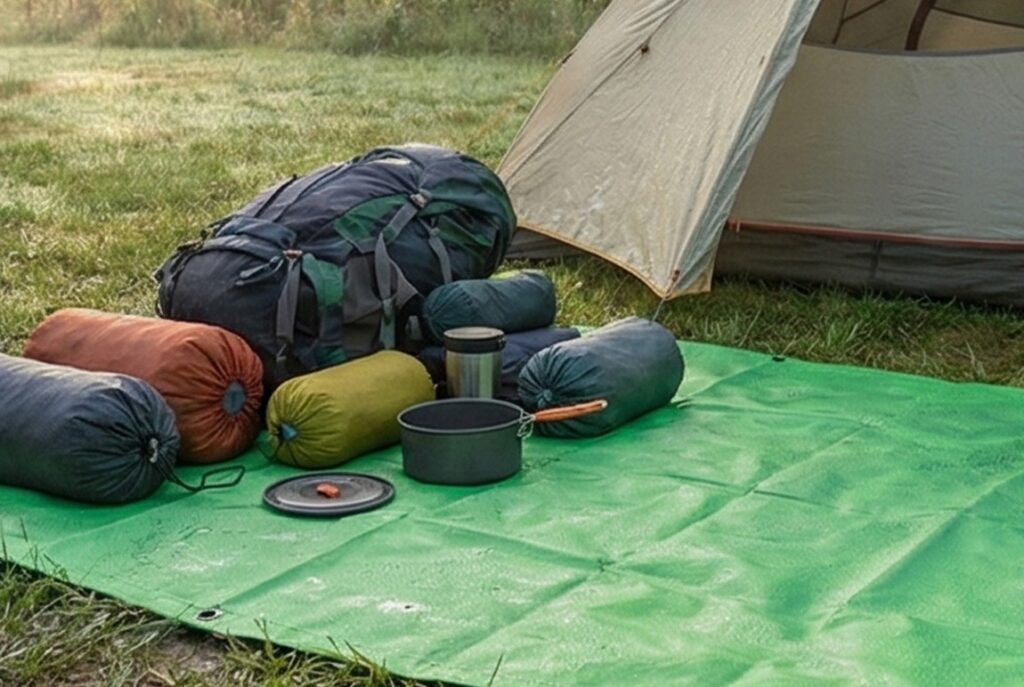
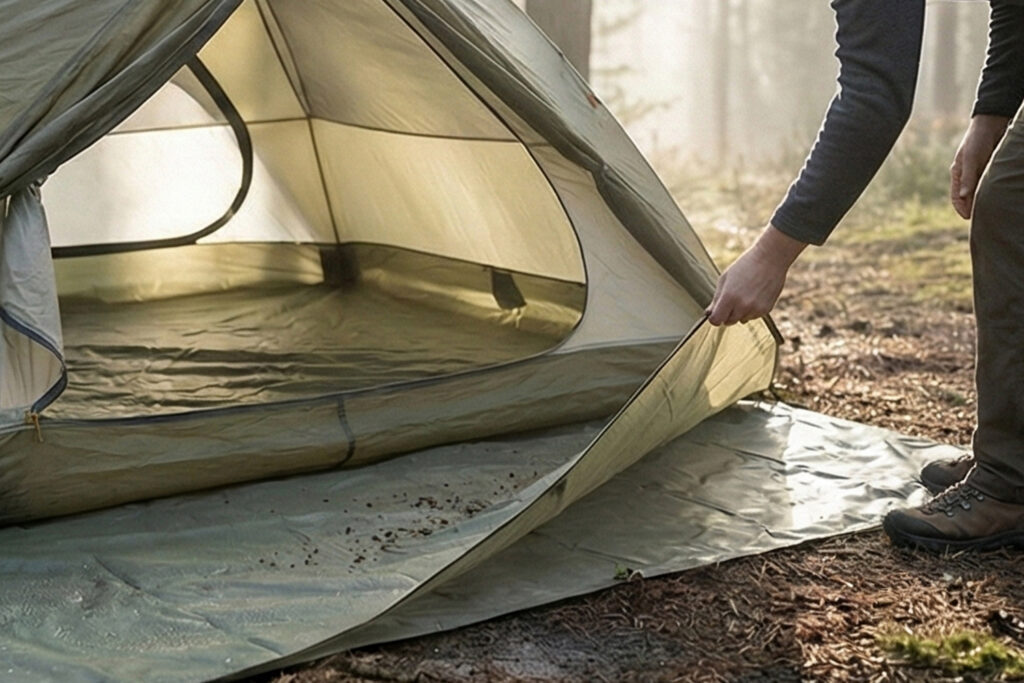
A tent footprint sits between your tent and the ground to reduce abrasion, punctures, and moisture transfer. If you are unsure whether it is worth carrying, these common scenarios can help you decide.
- You’re camping on rocky or abrasive terrain: Gravel, granite, and packed rock can act like sandpaper against a tent floor. A footprint adds a sacrificial layer so sharp edges and grit wear down the ground sheet instead of your tent.
- Your tent has an ultralight floor: Ultralight tents save weight by using thinner fabrics, which can puncture more easily. A ground sheet helps protect that lightweight floor and can extend the tent’s service life.
- You’re planning extended camping trips in wet weather conditions: In sustained rain, water and ground moisture can exploit small weak points in seams and coatings. A waterproof ground sheet reduces seepage and keeps the floor cleaner when conditions stay wet for days.
- You want to keep your tent floor clean for faster pack-up: Even in dry weather, mud, grit, and pine sap cling to your tent base and add cleanup time at home. A ground sheet creates a barrier you can shake out and wipe down quickly before you pack.
- You’re setting up on established campsites with unknown debris underneath: Busy campsites can hide small hazards like tiny rocks, thorns, or even glass in the soil. A footprint helps buffer surprises and makes it easier to keep your tent base in good condition.
4 Occasions When You Might Not Need to Bring a Tent Footprint Along
A ground sheet is useful in many conditions, but it is not mandatory on every trip. If you camp on forgiving surfaces, prioritize ultralight packing, or have a more rugged tent floor, you may be able to skip it.
- You’re ultralight backpacking and counting every ounce: If you are minimizing carried weight, a dedicated footprint might not make the cut. In that case, careful campsite selection and a minimalist ground cloth can provide some protection with less bulk.
- Your tent has a heavy-duty floor designed for rugged use: Some tents use thicker, more abrasion-resistant bathtub floors that tolerate rough handling. If you are camping on soft ground or smooth pads, an extra layer may add little benefit.
- You’re on a short overnight trip in an established campground: On a single night on a smooth tent pad, wear on the floor is usually minimal. You can often skip a ground sheet and rely on good site prep to avoid sharp debris.
- You’re carrying a patch kit and confident in repairing small punctures: If you are comfortable repairing small holes, you can accept a bit more risk to reduce carried weight. Inspect the floor regularly and patch early before small damage spreads.
The Hidden Damage Happening to Your Tent Base Right Now (& How to Stop It)
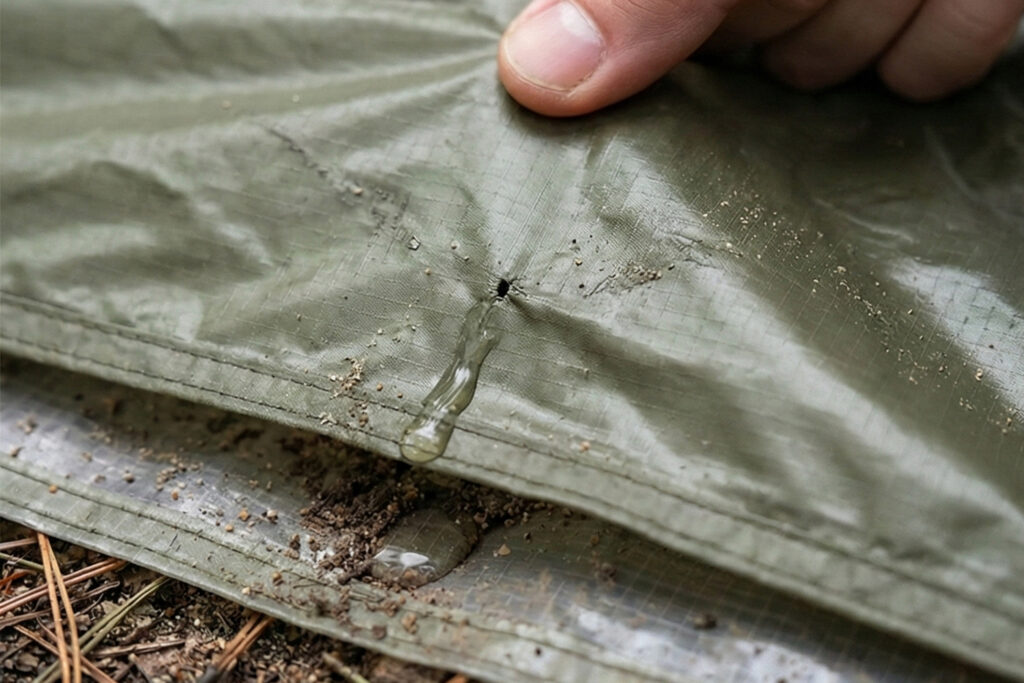
Most tent-floor failures happen slowly: abrasion from grit, micro punctures from sharp debris, and stress at corners when the tent shifts during setup. Over time, those small scuffs can turn into leaks and tears, especially on lightweight fabrics.
Moisture can accelerate wear. Pressure from kneeling or sleeping can force water through seams, and muddy grit can grind into coatings as you move. A well-sized ground sheet plus a few campsite habits can significantly reduce this damage.
- Clear and prep the site: Remove sharp sticks, cones, and small stones before pitching to reduce punctures and abrasion.
- Size and tuck the ground sheet: Keep it slightly smaller than the tent floor (or fold excess under) so rain cannot collect and funnel underneath.
- Keep it clean and dry: Shake off grit before packing, and dry the ground sheet and tent floor when possible to reduce long-term wear and odor.
Ground Sheet Showdown: Which Floor Protection Material is Superior?
This section provides practical guidance to help you make an informed choice for your next trip:
| Attribute | Renegade Tarp | Canvas Tarp | Generic Blue Tarp | Tent Footprint | Winner: |
| Weight & Ease of Packing | Durable for its weight; rolls compactly and stays manageable even when damp. | Bulky and heavy, and it can become noticeably heavier when wet. | Very light and easy to pack, but thin material can tear and degrade quickly. | Typically the lightest and most packable because it is sized for the tent. | Tent Footprint |
| Versatility | Multi-purpose use as ground cloth, rain fly, emergency shelter, gear cover, or picnic blanket. One piece of gear handles multiple camping needs. | Multi-purpose durability for ground cover, overhead shelter, or gear protection; breathable material works well in various applications. | Versatile and inexpensive for multiple uses including ground protection, rain cover, and emergency shelter; common camping staple. | Single-purpose design limited to ground protection only; can be awkwardly repurposed for overhead coverage or other camping applications. | Renegade Tarp |
| Durability & Protection | UV-resistant polypropylene withstands sharp rocks, punctures, and wet weather; reinforced edges and welded grommets prevent tearing and extend lifespan. | Extremely durable and tear-resistant; handles sharp objects well but absorbs moisture and becomes heavy when wet; prone to mildew without proper care. | Punctures and tears easily on sharp rocks; UV exposure causes rapid degradation; grommets frequently rip out; sheds plastic fragments as material breaks down. | Designed specifically for tent floor dimensions; lighter denier fabrics may puncture more easily on rough terrain like rocky campsites. | Renegade Tarp |
| Environmental Impact | Fully recyclable polypropylene with no toxic chemicals; no phthalates, lead, or PVC that leach into soil and water on the forest floor. | Natural cotton fiber biodegrades over time; most are made without toxic chemicals but require water-resistant treatment that may contain chemicals; not recyclable. | Contains PVC and plasticizers that shed microplastics on forest floor; breaks down into harmful fragments; not recyclable and contributes to landfill waste. | Most footprints end up in landfills after wear; materials often contain additives that break down into microplastics in outdoor environments. | Renegade Tarp |
7 Steps to Lay Your Tent Tarp the Right Way, Every Time
There is no single best option for every camper. The comparison below highlights how common ground protection choices stack up on packability, versatility, durability, and environmental considerations so you can match the gear to your priorities:
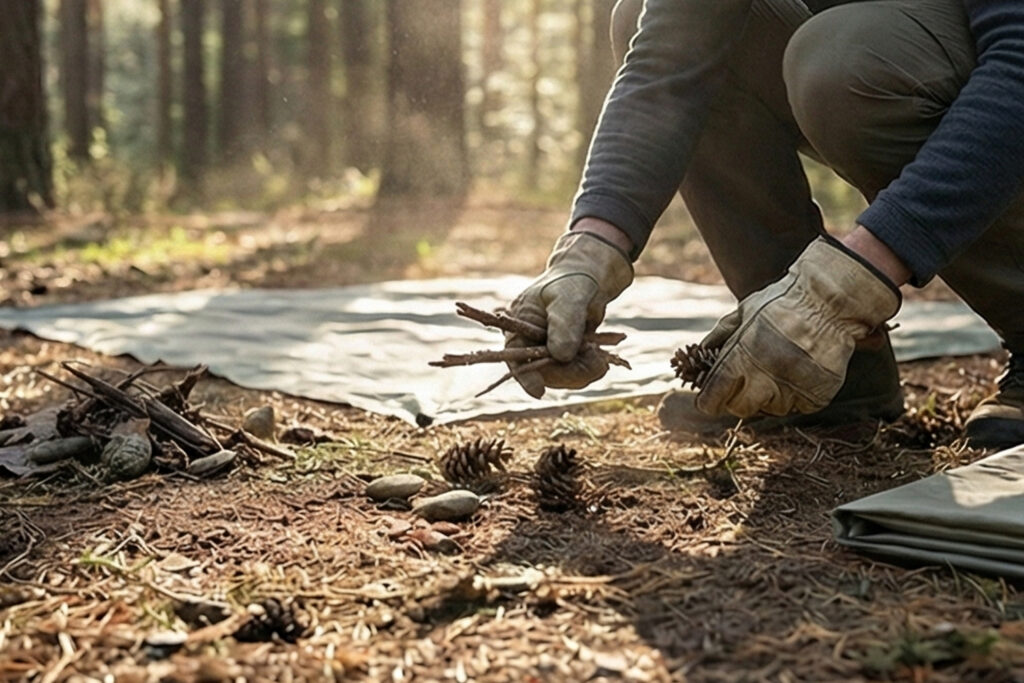
- Clear the campsite of sharp objects, sticks, and large debris before laying anything down: This reduces punctures and keeps grit from grinding into your tent floor overnight.
- Unfold your ground cloth and position it where you plan to pitch your tent: Align it with your intended tent placement so the floor will sit fully on the protected area.
- Double check that your tarp is slightly smaller than your tent floor on all sides: Tuck or fold any excess underneath so exposed edges cannot catch runoff and channel water under the tent.
- Secure the corners with tent stakes or heavy rocks to prevent shifting during setup: Securing it first prevents bunching while you assemble poles and stake the tent.
- Pitch your tent directly on top, aligning tent corners with the ground cloth edges: Keep the ground cloth flat as you tension the tent so you do not create wrinkles and pressure points.
- Inspect the perimeter to ensure no tarp extends beyond your tent’s footprint: If you see exposed material, tuck it under the tent body to reduce water pooling in rain.
- Adjust and re-stake if needed to prevent water from pooling underneath in rain: If conditions change, re-check after wind or heavy rain and re-tuck before a small puddle becomes a problem.
Tent Tarp Sizing Guide: Finding the Perfect Fit for Your Tent Base
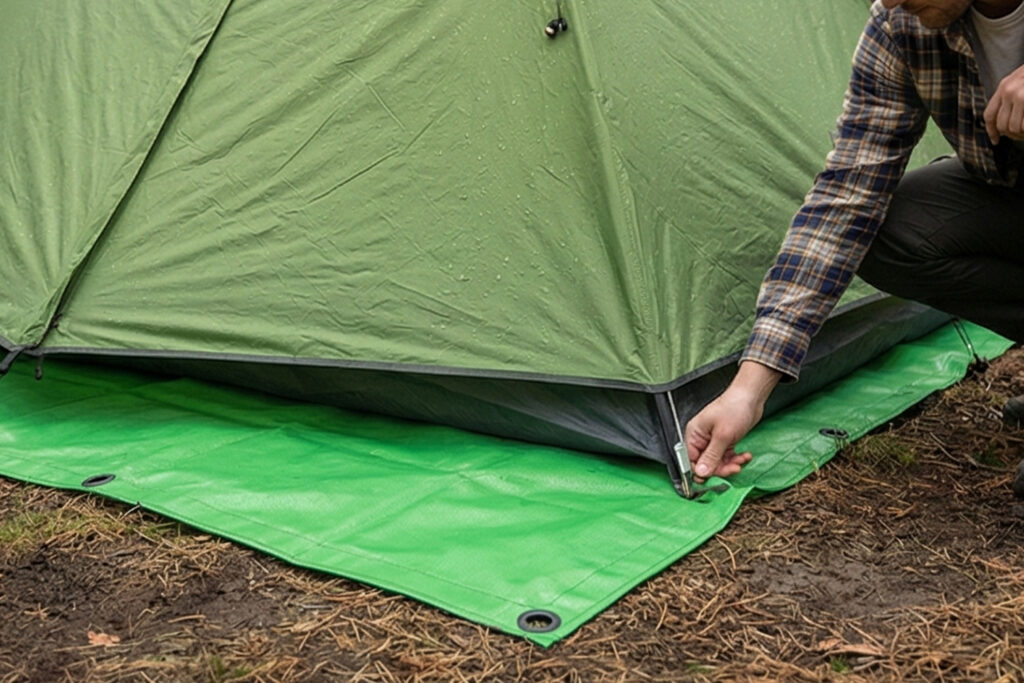
Start by measuring your tent floor (length and width) and note whether the shape is rectangular, tapered, or has vestibules. The best ground sheet coverage is slightly smaller than the tent floor on all sides so rain cannot land on exposed edges and funnel underneath.
If you are using a tarp that is larger than your tent base, fold and tuck the excess under the tent before staking. For car camping or base camp setups, you can choose a larger tarp for added gear coverage, but plan to manage edges carefully in wet weather.
Ideal for small one-person tents, bivy setups, or ultralight shelters where you just need a clean, abrasion-resistant layer under your sleeping area. It’s also handy as a gear mat in the vestibule to keep gear and packs out of the dirt, or as a clean place to sit after a day of hiking.
A solid pick for most 1–2 person backpacking tents, giving you enough coverage to protect the floor while still being easy to fold and tuck tight. It also works well as a compact “front porch” ground mat under a vestibule forgear and packs
Great for 3-person or 4-person tents, especially if you want a little extra coverage for a vestibule area (just fold/tuck excess under the tent base). At a car-camping site, it can double as a dry staging zone for packs, coolers, and other gear beside the tent.
Best for >4 person family tents or base-camp setups where you want more flexibility for gear management around the tent footprint. It’s also a practical choice if you plan to use the same tarp as a combined footprint + covered gear area, as long as you manage edges carefully in rain.
Expert Tips to Choose the Ideal Ground Cloth for These 5 Different Camping Surfaces
This section provides practical guidance to help you make an informed choice for your next trip.
- Rocky Alpine Terrain & Gravel Campsites: Prioritize puncture resistance and take extra time clearing sharp points. A tougher ground sheet can save your tent floor from gravel abrasion.
- Forest Floor with Sticks & Pinecones: Remove cones and snapped branches, then aim for flat ground to avoid pressure points. A ground cloth also helps keep sap and moisture off the tent bottom.
- Soft Sand & Beach Camping: Sand behaves like grit, wearing fabric as it shifts under load. Use a ground cloth, then shake it out before packing so sand does not grind into seams later.
- Established Campground Pads: Tent pads provide a great flat surface for your tent, but the harder surface can really rough up the floor of your tent. A lightweight footprint can keep the floor cleaner and reduce long-term wear.
- Snow & Winter Camping Conditions: Melt-freeze cycles can soak a tent base during the day and refreeze overnight. A ground sheet can add a moisture barrier, but pair it with an insulating sleeping pad for warmth.
5 Less Obvious (But Brilliant) Uses for Your Tent Footprint

Your tarp can have multiple uses:
- Emergency rain shelter when weather turns unexpectedly: Rig it as a quick lean-to with trekking poles or a ridgeline to stay dry while cooking or waiting out a short squall.
- Clean staging area for organizing gear and cooking equipment: Lay it out as a no-dirt zone for sorting gear and keeping cookware out of the mud, especially on wet mornings.
- Picnic blanket or seating area: Use it as a sit pad for lunch breaks or a clean surface for kids and pets; it shakes out quickly before packing.
- Protective cover over your backpack and electronics at camp: Drape it over packs and sensitive items to keep dew and light rain off while you are away from camp.
- Makeshift changing room for privacy: Hang the tarp from a ridgeline or between two trees as a simple privacy screen for changing clothes, using clips or cord to keep it from flapping in the wind.
Ground Sheet Confusion? 5 Common Questions About Protecting Your Tent, Answered
Protecting your tent floor can feel confusing, so here are straightforward answers to the most common ground sheet questions campers run into.
- How do I prevent water from pooling between my tent and ground sheet? Keep the ground sheet slightly smaller than the tent floor or fold excess material underneath so no edges catch runoff. Also choose the highest spot available and tension the tent so water sheds away from the perimeter.
- Will a tent footprint provide insulation from cold ground temperatures? Not much. A footprint can reduce dampness, but it does not replace an insulating sleeping pad or mattress. For warmth, focus on the R-value of what you sleep on.
- Can I put a tarp inside my tent instead of underneath it? You can, but it does not protect the tent floor from abrasion and punctures the way an external ground sheet does. If you try it, avoid trapping water and make sure the surface is not slippery.
- Do I need a footprint if my tent has a bathtub floor? A bathtub floor is waterproof, but it can still abrade over time. A ground sheet is optional insurance on rough terrain or longer trips.
- Can I use a DIY ground sheet like Tyvek or polycryo? Yes. Many campers cut these materials to size for a lightweight option, but they usually lack reinforced edges and may be less durable than purpose-built gear.
Ready for Extra Protection? Get Your Eco-Friendly Ground Cloth Today
If you prefer a multipurpose option that can serve as a ground cloth under your tent and as a general camp tarp, explore the tarp sizes and material details at renegadetarps.com. The product pages include care tips, sizing guidance, and information on end-of-life recycling so you can choose gear that matches your camping style.


Interested in Our Fabrics?
Contact Us