
How to Know the Best Coated Fabric Manufacturers From The Rest
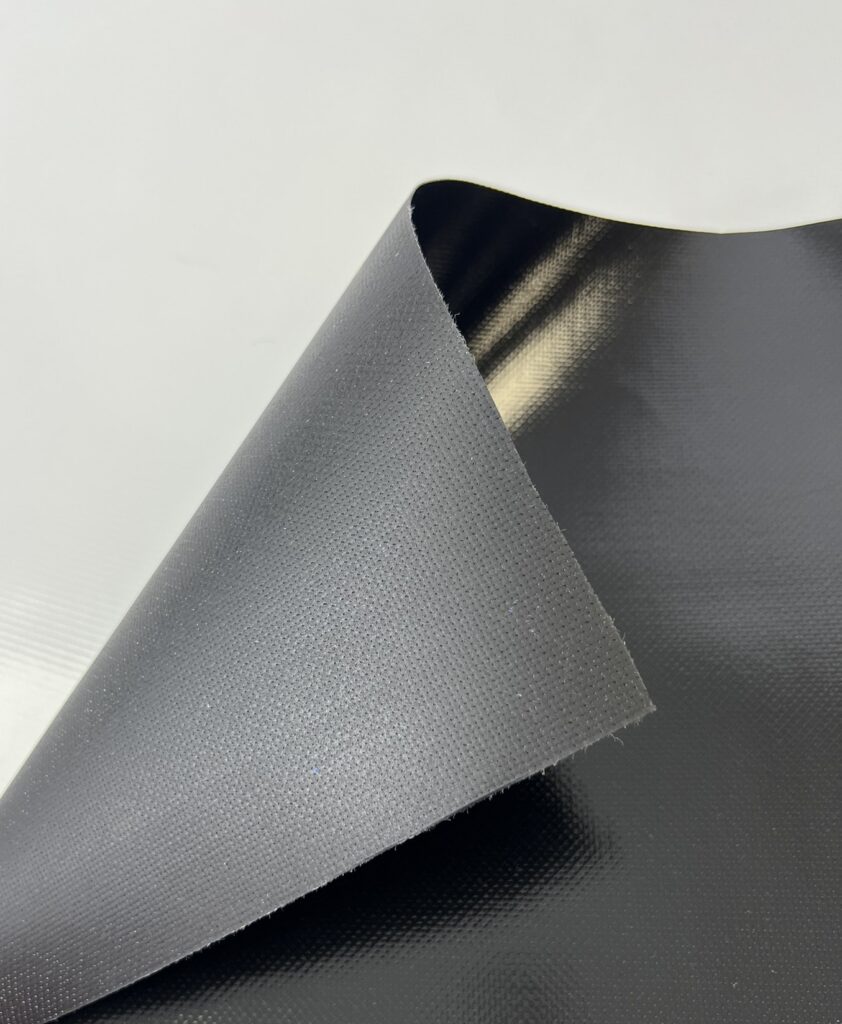 Coated fabric is one of those quiet workhorse materials that nearly every heavy industry depends on, and yet very few buyers stop to ask what it’s actually made of. For decades, the default answer has been PVC: cheap, available, and weldable, but also:
- Brittle in the cold
- Loaded with phthalates
- Effectively impossible to recycle
As specifications tighten and procurement teams push harder on safety, weight, and end-of-life, the gap between legacy coated fabric manufacturers and what a modern operation actually needs has grown impossible to ignore.
This page is built for the buyers, engineers, and product managers doing that comparison shopping. We break down how the major coating chemistries stack up, the third-party certifications that separate real performance from marketing copy, the seven Renegade fabrics engineered to replace PVC line-for-line, and the industrial applications and industries where a recyclable coated polypropylene fabric outperforms the status quo. If you’re evaluating coated fabric manufacturers right now, start here.
Honest Comparison: What’s the Difference Between Different Coated Fabric Chemistries?
Not all coated fabric is created equal, and the coating chemistry is where most of the real differences live. Substrate yarn matters, but it’s the polymer skin laminated, calendared, or extruded onto that yarn that decides how the finished fabric handles cold, chemicals, UV, fire, abrasion, and end-of-life recovery.
The table below summarizes the six coating chemistries you’re most likely to encounter when evaluating coated fabric manufacturers, what each is best at, and where each falls short:
| Coating Type | Best For | Key Strength | Key Weakness | Prop 65 Warning | Can Be Recycled |
|---|---|---|---|---|---|
| PVC | General industrial, legacy applications | Low cost, wide availability | Cold cracking, VOC off-gassing, phthalates | Yes | No |
| Polyurethane | Flexible ducting, apparel | Flexibility, abrasion resistance | Limited chemical resistance, cost | Varies | Limited |
| Silicone | High-temp, aerospace, food grade | Extreme temperature range | High cost, limited fabrication options | No | Limited |
| Neoprene & Rubber | Automotive, bellows, seals | Elasticity, oil resistance | Weight, fabrication complexity | Varies | No |
| EPDM & Butyl | Chemical containment, weatherproofing | Weather & ozone resistance | Narrow application range | Varies | No |
| Polypropylene | Industrial, agricultural, sports, marine | Lightweight, non-toxic, can be recycled, cold-flex | Less common in legacy supply chains | No, unless FR is used | Yes |
5 Certifications That Distinguish How Our Fabrics Hold Up Under the Microscope
Performance claims are easy to make and harder to back. The fastest way to separate serious coated fabric manufacturers from the rest is to look at the third-party certifications their materials carry, because those certifications are the ones that procurement teams, code officials, and safety auditors actually recognize. Renegade’s coated polypropylene fabrics are tested against the standards below so you don’t have to take our word for any of it.
Each certification answers a specific question: will it burn, will it leach, is it safe around children, and will it pass jurisdictional inspections. Here’s how our fabrics perform against the five properties that matter most to industrial buyers:
- NFPA-701
Renegade’s fire-retardant fabrics are certified to NFPA-701, the flame propagation standard that governs textiles used in public-facing commercial spaces, curtain walls, and stadium covers. If a project specifies flame-resistant fabric, this is the test that lets your buyer sign off without a second meeting. - Cal Fire Marshal Title 19
Our fire-retardant materials are registered with the California State Fire Marshal for both interior and exterior use, which keeps you compliant in the country’s strictest jurisdiction. Specifying a Title 19 fabric up front saves a downstream re-spec when a project crosses state lines. - CPSIA Component Compliance Testing
CPSIA testing certifies our fabrics for use in environments and products that come in contact with children, including school gymnasiums, recreation centers, and athletic padding. That matters for athletic mats and any application where end-users are children. - EU Toy Safety EN 71-3
EN 71-3 tests fabrics for the migration of heavy metals lead, cadmium, mercury, and the rest of the list), making the material suitable for skin-contact applications and for products bound for European markets. Most legacy PVC fabrics struggle with this one because of their stabilizer chemistry. - Proposition 65 Compliance
Our non-fire-retardant fabrics are Prop 65 compliant, meaning they’re free of the chemicals California has flagged as carcinogens, reproductive toxicants, or developmental hazards. That keeps your finished goods out of the labeling and disclosure mess that follows most PVC-coated material into the supply chain.
7 Renegade Fabrics Built to Replace the PVC Products Your Line Has Outgrown
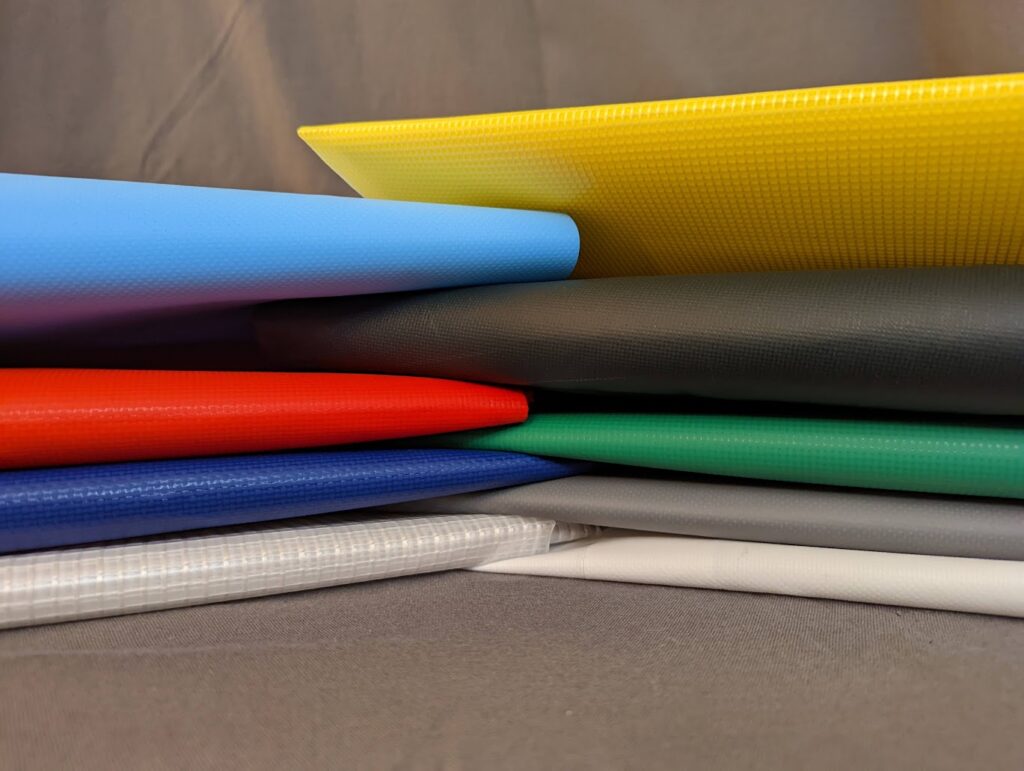 Renegade’s product line was engineered from the ground up to be a one-for-one replacement for the flexible vinyl-coated fabrics that have dominated industrial supply chains for half a century. Each product is a coated polypropylene composite (a woven polypropylene scrim sandwiched between layers of our proprietary PP coating) so the entire fabric can be recycled as a single material stream.
Below are seven core fabrics, organized roughly from lightweight to maximum-duty. Match the weight class to the failure mode you’re trying to engineer out of your finished product.
- PPI-200: The Lightweight Entry Point. PPI-200 is our lightest coated polypropylene fabric, suited to applications where weight, handling, and clean aesthetics matter more than maximum tear strength. It’s a strong fit for short-term covers, divider curtains, and indoor protective barriers where a heavier fabric would be overkill.
- PPI-270: Midweight Versatility. PPI-270 adds weight and tensile capacity without giving up the flexibility that makes a fabric easy to fabricate, weld, and install. It’s the all-purpose midweight in our lineup, used across agricultural, recreational, and light industrial covers where you want margin without overspecifying.
- PPI-370: The Workhorse Replacement. PPI-370 is the direct line-for-line swap for the standard 18-oz vinyl fabric most legacy operations are still buying. It carries the tensile and tear properties needed for industrial covers, side curtains, and field tarps, and it does so without phthalates, lead, or intentionally added PFAS.
- PPI-370 Embossed: When anti-slip traction matters. PPI-370 Embossed delivers the same workhorse weight class with a textured surface engineered for slip resistance. It’s the right choice for drop cloths, thermo composite applications, gym floor covers, and a variety of other applications where traction is important.
- PPI-420: Maximum Duty Applications. PPI-420 is our heaviest stock fabric, built for the jobs that wear lighter materials out (such as heavy-duty trailer curtains, long-life field covers, and outdoor industrial applications under continuous mechanical load). Specify it where downtime, replacement labor, or warranty exposure outweigh the weight penalty.
- Flex-320 Embossed: Conformability Without Compromise. Flex-320 Embossed is engineered for applications that demand drape, fold memory, and tight-radius conformability without cracking the coating. Use it where the geometry of the finished product is doing as much work as the material itself, such as fitted covers, custom enclosures, and shaped industrial fabrications.
- Hydro-370: Built for Abrasion-First Environments. Hydro-370 is purpose-engineered for environments where moisture, grit, and continuous abrasion are the dominant failure modes, including marine, waterfront, and wet industrial applications. It carries the recyclability story of the rest of the line while standing up to the conditions that chew through standard fabrics first.
7 Industrial Applications That Expose Every Weakness in Traditional Coated Fabric
Some applications are forgiving. The ones below aren’t.
They’re the environments where temperature swings, abrasion, chemical exposure, and continuous mechanical load combine to expose every weakness a coated fabric has (cold cracking, plasticizer migration, delamination, UV chalking, and the rest). They’re also the applications where Renegade’s coated polypropylene composite consistently outperforms legacy PVC.
If your operation runs in any of these seven environments, the spec sheet alone won’t tell you whether a fabric will hold up. The failure modes do.
- Cold Storage & Refrigerated Warehousing
Sub-freezing operating temperatures are where flexible PVC fails first: the plasticizers migrate out, the coating goes brittle, and seams crack under handling. Renegade’s coated polypropylene stays flexible at the temperatures cold chain operations actually run. - Marine & Waterfront Operations
Saltwater, UV, and continuous abrasion against decking and hardware are the standard failure mode in marine work. Our coated fabrics resist water absorption, hold color under UV, and don’t off-gas the way vinyl-coated material does in enclosed cabins or below-deck storage. - Agricultural Storage & Field Coverage
Hay tarps, silage covers, barn curtains, and equipment covers all sit outside year-round under UV, wind load, and animal contact. Renegade fabrics deliver longer service life than poly sheeting and a cleaner end-of-life story than vinyl, which matters as ag procurement increasingly screens for recyclable agricultural fabric. - Construction Site Protection
Jobsite tarps, construction plastic, scaffold wraps, and dust containment all see weeks of exposure followed by repeated re-deployment. Lightweight, tear-resistant Renegade fabric handles that cycle without the cracking and shedding that turn cheap blue tarps into a shredded mess. - Mining & Extraction Environments
Conveyor covers, ventilation curtains, and stockpile protection in mining operations face dust loading, chemical exposure, and high-abrasion conditions that destroy coated fabrics built for milder service. Our composite holds up under that load and is naturally UV and mildew resistant. - Event & Stadium Venue Conversion
Stadium turf protection, court covers, and rapid-deploy floor systems demand fabrics that are flame-rated, slip-resistant, and light enough for a small crew to install on a turnaround. Renegade fabrics carry NFPA-701 and Title 19 ratings and weigh on average 40% less than equivalent PVC. - Military & Defense Logistics
Shelter systems, vehicle covers, and field-deployable enclosures are written into specs that require domestic supply, demonstrated performance, and reduced toxicity. Renegade ships from a domestic supply chain that doesn’t depend on overseas PVC inventory.
8 Industries Ready for Superior Fabric Solutions
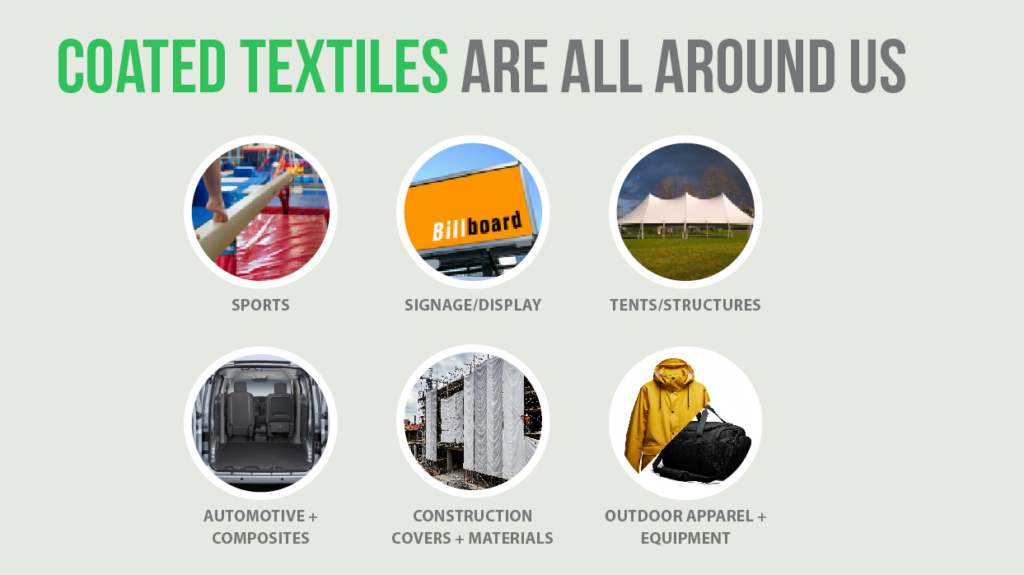 Coated fabric isn’t one market; it’s a long list of industries that each have their own performance language, regulatory pressure, and procurement pace. The eight industries below are ones where Renegade is already shipping, and where the move from PVC to the more modern coated polypropylene is happening fastest.
If you’re sourcing for any of these industries and you’re still defaulting to a legacy vinyl spec, you may already be behind the competition in transitioning to Renegade’s modern polypropylene fabrics.
- Agriculture
Hay tarps, barn curtains, silage covers, and greenhouse panels all benefit from a UV-stable, lightweight fabric that doesn’t leach plasticizers into soil or feed. Renegade’s agricultural fabric line is built specifically for this duty cycle. - Construction & Roofing
Temporary enclosures, weather barriers, and construction plastic sheeting all need to handle wind load, sub-freezing temperatures, and repeated re-deployment without shedding microplastics on the jobsite. Renegade fabrics deliver that durability without the flame and chemical compromises of cheap poly. - Transportation & Logistics
Trailer side curtains, truck covers, and curtain sider systems are where coated fabric earns or loses its weight allowance. Lighter transportation material means lower fuel burn, and our durable PP composite gets you both without surrendering tear strength. - Marine
Boat covers, dock curtains, and marina enclosures live in the harshest UV-and-saltwater combo of any application. Our coated polypropylene resists water absorption and holds up to salt water environments without the chalking that kills vinyl in a season or two. - Sports & Athletics
Gym mats, wall pads, athletic mats, field covers, and stadium tarps all face skin contact, repeated impact, and code requirements like NFPA-701 and CPSIA. Our sports fabric line is certified for all of it. - Industrial Manufacturing
Floor protection, machine covers, containment curtains, and process enclosures all demand a fabric that is low-VOC, durable, and consistent batch to batch. Our industrial fabrics hold tolerance and don’t off-gas inside enclosed manufacturing spaces. - Outdoor Recreation & Events
Canopies, festival enclosures, and outdoor furniture covers need to look good, hold color, and survive deployment cycles. Renegade’s outdoor fabrics deliver UV stability and aesthetic consistency without the toxicity baggage of PVC. - Print & Banner
Wide-format banner fabric demands a coating that takes ink cleanly, resists weathering, and doesn’t crack at the grommet. Our coated polypropylene accepts standard inks, holds color outdoors, and finishes the campaign cycle without delaminating.
Still Have Questions About Coated Fabric? Here Are 6 That Buyers Ask Most
These are the questions our specifiers, fabricators, and procurement contacts ask most when they’re comparing coated fabric manufacturers… and short, honest answers we hand back. If yours isn’t on the list, our team is the right next call.
- What’s the difference between coated and laminated fabric? Coated fabric has the polymer layer applied directly to the woven scrim as a liquid or molten film, bonding into the yarn. Laminated fabric has a pre-formed film adhered to the scrim with an adhesive layer, which adds a third material and a potential delamination point. Coated fabrics generally handle abrasion and welding better; laminated fabrics can sometimes deliver thinner, more uniform films.
- How do I know what coating weight is right for my application? Match the weight class to the dominant failure mode, not the theoretical max load. Lighter fabrics like PPI-200 and PPI-270 are right for short-cycle covers and indoor barriers; midweight PPI-370 is the workhorse for industrial covers; PPI-420 is for continuous outdoor and mechanical-load applications. When in doubt, ask us for a sample in two weight classes and test the install before specifying.
- Can coated polypropylene fabric be thermally welded or sewn? Yes. Our fabrics weld cleanly with hot-air and impulse welding equipment, the same setup most fabricators already run for PVC. They also sew with standard industrial machines and threads. The one exception is ultrasonic welding, which the polypropylene chemistry doesn’t support.
- What happens to coated fabric at the end of life? Most coated fabric on the market today goes to landfill because the coating chemistry and the substrate are different polymers and can’t be separated. Our composite is made from a single material category (e.g. polypropylene scrim, polypropylene coating) so it can be mechanically recycled into reprocessed polypropylene resin through our take-back program.
- How does temperature range affect coating selection? Cold is where coatings reveal themselves. PVC plasticizers migrate out below freezing, leaving the coating brittle and crack-prone, which is why cold storage and winter logistics are early indicators of fabric quality. Polypropylene-based coatings retain flexibility well below freezing because they do not rely on plasticizers.
- What’s the lead time for custom widths or non-stock specifications? Stock widths in our standard product line typically ship from inventory. Custom widths, custom colors, and non-stock weight classes are produced to order and lead times scale with run size and current production schedule. Get us your spec early in the design cycle and we’ll quote a realistic delivery window before you commit.
Ready for a Coated Fabric That Works as Hard as Your Operation Does?
If you’ve made it this far, you’re past the point of comparing brochures and ready to put a fabric on the line. Renegade ships coated polypropylene fabric that meets or beats legacy PVC on tear strength, weight, and certification, all without phthalates, lead, or intentionally added PFAS, and with a real end-of-life recycling path through our take-back program. That’s the spec sheet most coated fabric manufacturers can’t hand you.
The fastest way to evaluate is a sample roll. Contact our team, call us directly at (920) 348-4554, or browse the full product line and tell us what you’re trying to replace. We’ll match a fabric to the job and get it in your hands.