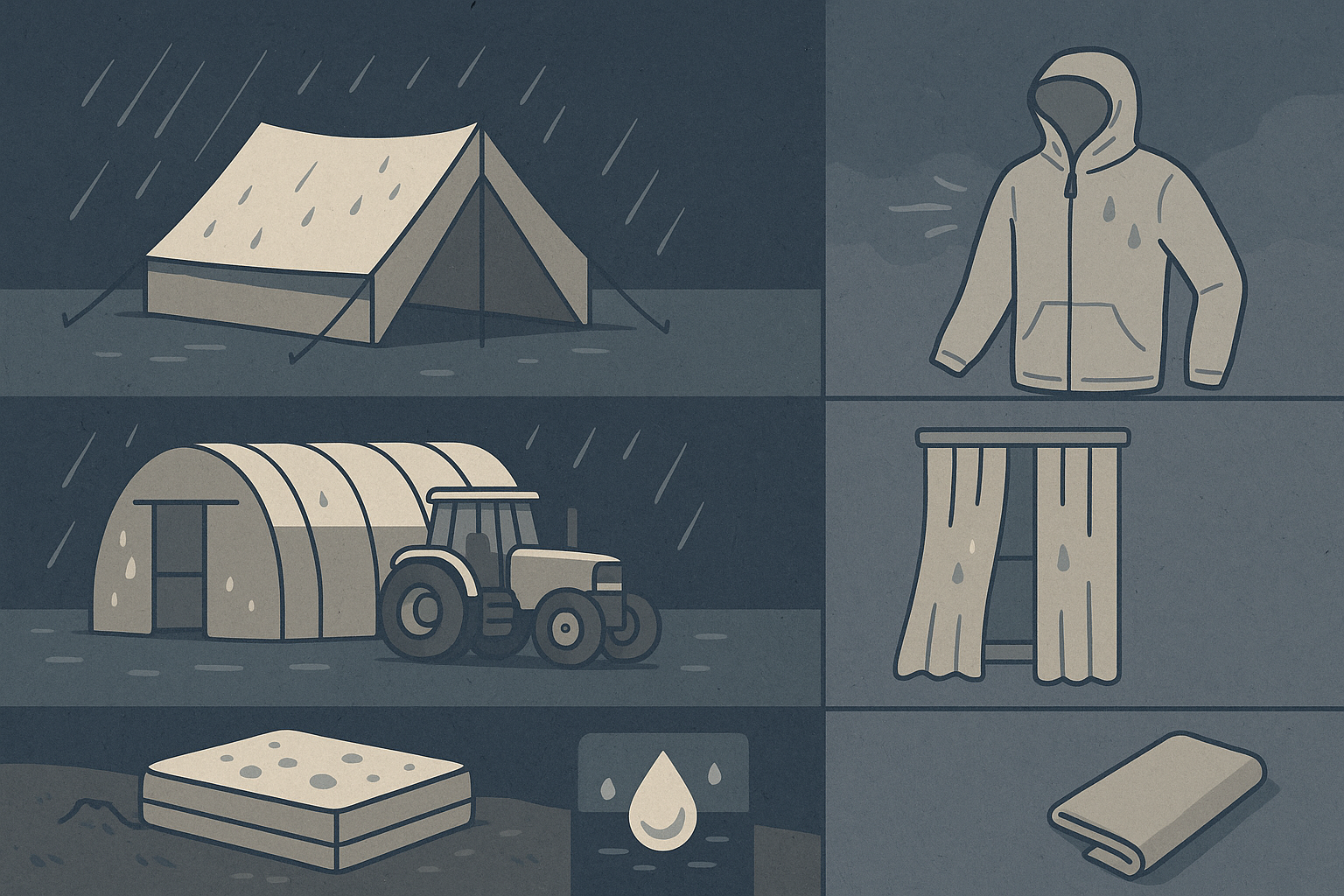
“Water resistant,” “water repellent,” and “waterproof” often appear on the same kinds of products, but they don’t promise the same protection. A fabric that handles a passing shower may fail when water pools on it or presses against it. The right choice depends on how wet it will get, for how long, and what happens if water gets through.
Water Resistant vs. Waterproof vs. Water Repellent: The Real Difference
The distinction to remember: Repellent describes what water does at the surface. Resistant describes a degree of protection. Waterproof describes a barrier, but you still need to know the conditions under which it was tested.
For example, a fabric can shed droplets beautifully and still leak when water pools on it. A waterproof fabric can also become part of a leaky cover if its seams are sewn and left unsealed.
Water repellent
- What it tells you: Water beads and rolls off the surface, often because of a finish or treatment. Beading alone does not tell you whether the fabric will leak under pressure.
- Typical use: Light, brief exposure to rain
- Example: A jacket with a durable water repellent finish
Water resistant
- What it tells you: The material slows water penetration but may let water through during prolonged exposure or under pressure.
- Typical use: Occasional splashes or light rain
- Example: An uncoated, tightly woven synthetic cover
Waterproof
- What it tells you: The material prevents liquid water from passing through under its specified test conditions. Finished-product performance also depends on seams, fasteners, and construction.
- Typical use: Sustained rain, pooling water, or applications that require a reliable barrier
- Example: A coated tarp with appropriately sealed seams
What Does “Waterproof” Actually Mean?
For fabric, waterproof means liquid water does not pass through the material under defined conditions. It does not mean that every product made with that fabric can withstand unlimited pressure, prolonged immersion, or any weather event.
That is why test results matter more than the label alone. ASTM D751 includes hydrostatic resistance methods for coated fabrics, while ISO 811 measures a textile’s resistance to water penetration under hydrostatic pressure. Ask a supplier which method was used, what the result was, and whether the finished product, including its seams, was evaluated.
You may also see IP ratings in discussions of waterproofing. Those ratings apply to the protection provided by an enclosure, such as an electronic device housing. They are not a substitute for a fabric test result.
For a protective cover or liner, ask one more practical question: Will water run off, sit on the surface, or press against it? Those conditions place very different demands on the material.
What Does “Water Resistant” Actually Mean?
A water-resistant fabric can withstand some contact with water without immediately letting it through. It may be tightly woven, made with fibers that absorb little water, treated with a water-repellent finish, or built with some combination of those features.
The limitation is exposure. A brief shower is different from hours of rain, standing water, or water forced against a fabric by wind or pressure. Treatments can also lose effectiveness with wear, cleaning, and time.
Water resistance may be enough for a cover used indoors, a short outdoor project, or a product that only needs to handle occasional splashes. If the contents must stay dry through sustained rain, look for a waterproof construction and relevant test data instead.
Common Waterproof and Water-Resistant Fabric Types
A material’s name does not guarantee its water performance. Coating, weave, thickness, seams, and finishing can change the answer considerably.
1. Coated polypropylene
What to know about water protection: A continuous coating can create a waterproof barrier. Check the specific product’s test results and fabrication requirements.
Common applications: Tarps and protective covers, along with other industrial textiles
2. Vinyl or PVC-coated fabric
What to know about water protection: Typically provides a waterproof barrier; weight, flexibility, and durability vary by construction.
Common applications: Truck tarps, industrial curtains, and covers
3. PU-coated fabric
What to know about water protection: A polyurethane coating can make a base fabric waterproof, depending on the coating and its test performance.
Common applications: Packs, covers, and outdoor gear
4. Latex or natural rubber-coated fabric
What to know about water protection: Can block water, though suitability depends on the formulation and exposure conditions.
Common applications: Specialty protective products
5. Synthetic rubber-coated fabric
What to know about water protection: Materials such as EPDM, butyl rubber, and silicone can provide water barriers, with different strengths and limitations.
Common applications: Liners, membranes, and specialty covers
6. GORE-TEX® and other membrane laminates
What to know about water protection: Designed to block liquid water while allowing some water vapor to pass through. Garment performance also depends on seams and construction.
Common applications: Rainwear and outdoor equipment
7. Polyester
What to know about water protection: Untreated polyester is not automatically waterproof. Coatings or membranes can change its performance.
Common applications: Covers, packs, and apparel
8. Nylon
What to know about water protection: Untreated nylon is not automatically waterproof. A repellent finish may shed light rain, while a coating or membrane can provide a waterproof barrier.
Common applications: Tents, packs, and apparel
9. Canvas
What to know about water protection: Untreated canvas is generally not waterproof. Its tight weave may resist some water, and wax or other treatments can improve protection, but performance depends on treatment and upkeep.
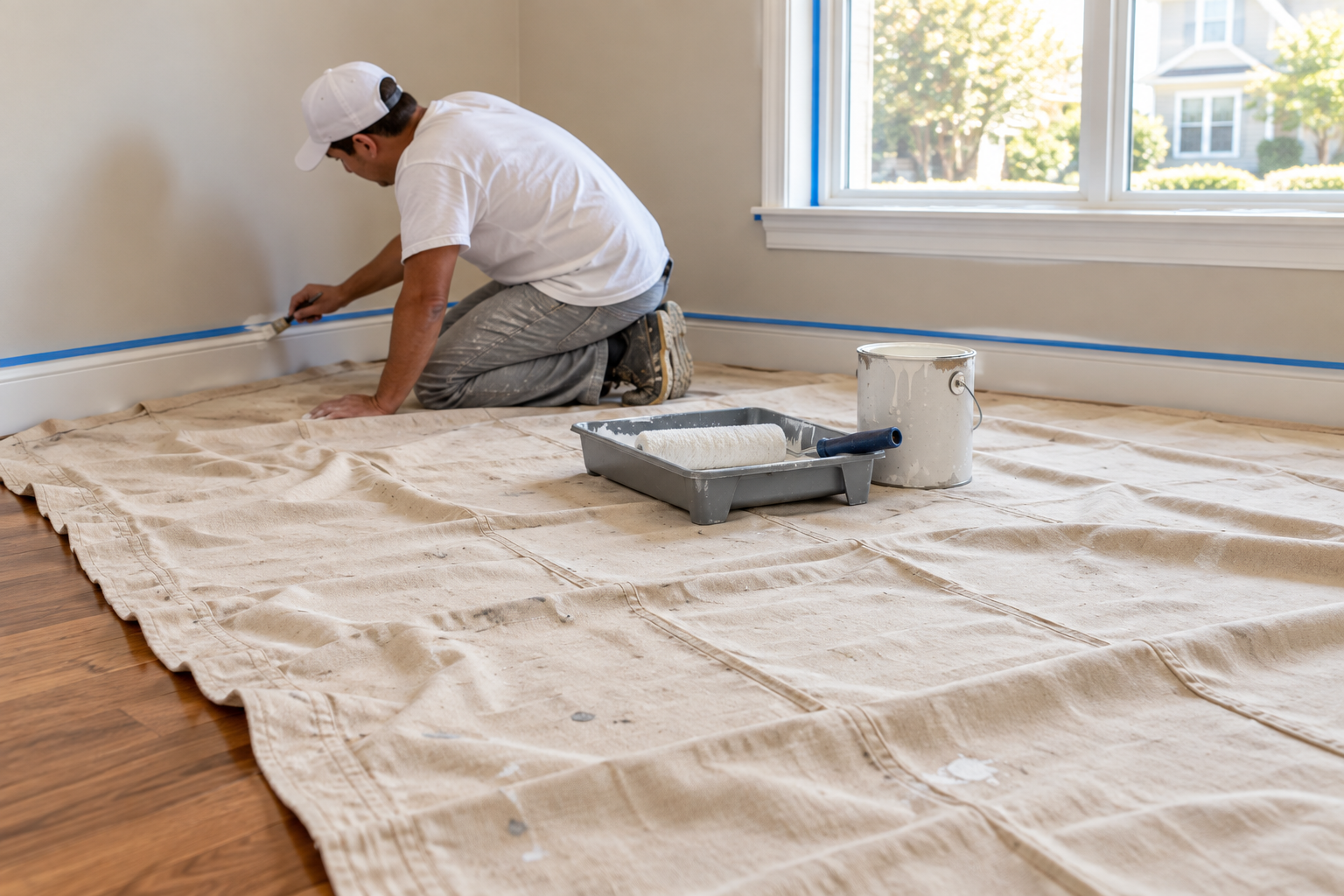
Common applications: Drop cloths, bags, and traditional covers
Which Fabric Performs Best for Your Application?
A waterproof label only tells you part of the story. Depending on the application, manufacturers may also evaluate hydrostatic resistance, tensile and tear strength, UV resistance, chemical compatibility, and cold-weather flexibility.
Test methods such as ASTM D751 and AATCC 127 can help measure resistance to water penetration, but results should be reviewed for the exact fabric and construction being considered. Ask suppliers which tests were performed, what the results were, and whether they apply to the fabric alone or the finished product.
*In AATCC 127 hydrostatic resistance testing, select Renegade fabrics withstood more than 270 cm of water pressure without penetration.
| What to compare | Why it matters | What to ask the supplier |
|---|---|---|
| Water resistance | Rain, standing water, and pressure demand different levels of protection. | What test method and result apply to this exact fabric? |
| Weight | Large covers can be difficult to lift, install, and store. | What is the fabric weight in gsm or oz/yd²? |
| Strength and durability | A waterproof cover is no help if it tears during use. | Do you have tensile, tear, abrasion, or puncture data relevant to my application? |
| UV resistance | Outdoor exposure can weaken or degrade a material over time. | What weathering or UV data do you have? |
| Chemical compatibility | Oils, cleaners, and other substances can affect materials differently. | Has this product been evaluated against the chemicals it will encounter? |
| Cold-weather flexibility | Some materials become harder to handle or more prone to cracking in the cold. | What low-temperature testing applies? |
| Fabrication | Stitching, welding, hems, and attachments can change finished-product performance. | Which joining methods work with this fabric, and how should seams be sealed? |
How Renegade Stacks Up
Choosing waterproof protection does not always mean choosing a heavy fabric. Renegade’s polypropylene-based coated textiles are designed to provide a waterproof barrier in a lighter, easier-to-handle material. That matters when a crew has to move a large cover, a fabricator needs to cut and join material, or a product designer is trying to reduce bulk.
Renegade fabrics are also weldable and provide an alternative to conventional PVC-coated textiles. Depending on the fabric selected, additional performance features include UV resistance, chemical resistance, and cold-weather flexibility.
For projects involving drinking water, Renegade also offers select materials certified to NSF/ANSI/CAN 61 for protective barrier liner applications of 50 gallons or greater. This certification addresses health-effects requirements for materials in contact with drinking water. It does not certify waterproofness, and eligibility depends on the exact material, color, configuration, and water-contact side. Review our NSF/ANSI/CAN 61 certified materials or confirm your requirements with our team.
The key is to compare the specific fabric and finished-product construction against your application, rather than assuming all waterproof fabrics perform alike. Explore Renegade fabrics, review the technology, or request a quote with your exposure conditions and performance requirements.
Frequently Asked Questions
Is canvas waterproof?
Untreated canvas is generally not waterproof. A tight weave can offer some resistance, while wax or another treatment can improve protection. If water must not pass through, check the finished canvas product’s stated performance and how its seams are constructed. For painting projects, see our canvas and tarp comparison.
Is nylon waterproof?
Nylon fiber alone does not make a fabric waterproof. An untreated nylon fabric may resist some moisture, while a properly coated or laminated nylon can provide a waterproof barrier. Check the construction and test result, especially for tents and covers where water may pool.
Is polyester waterproof?
Untreated polyester is not automatically waterproof. Polyester fabric can become waterproof when it is built with an appropriate coating or membrane. As with nylon, the finished item’s seams matter.
Can you sew waterproof fabric without causing leaks?
Sewing creates holes in the material. If the finished item must remain waterproof, its seams may need sealing or a suitable welding method. Ask the fabric supplier which joining methods work for the specific product.
Do waterproof fabrics need PFAS?
No. Different coatings and constructions can provide water protection. Renegade’s fabrics are made without intentionally added PFAS. Review the specification for the exact material you are considering.
What is the best fabric for a heavy-duty outdoor cover?
For demanding outdoor use, look for a fabric that is waterproof, UV resistant, durable, and manageable at larger sizes. Renegade Tarps check those boxes with lightweight, heavy-duty, polypropylene-based fabric that keeps water out without the bulk of traditional vinyl tarps. They are built for repeated use across applications such as equipment protection, construction projects, outdoor storage, and jobsite coverage.
The best choice still depends on exposure time, pooling water, chemicals, cold, and how often the cover will be moved. But if you need serious waterproof protection without wrestling with a heavy vinyl tarp, Renegade is a strong place to start. See how the materials compare in our guide to vinyl tarps.


Interested in Our Fabrics?
Contact Us